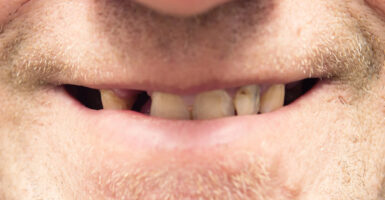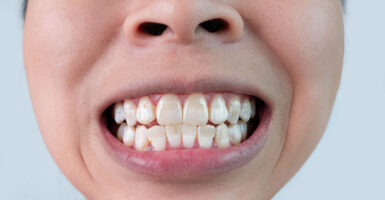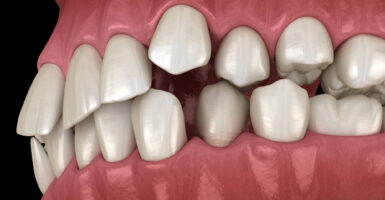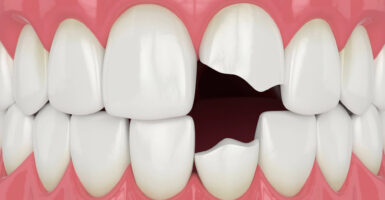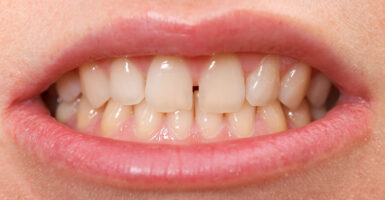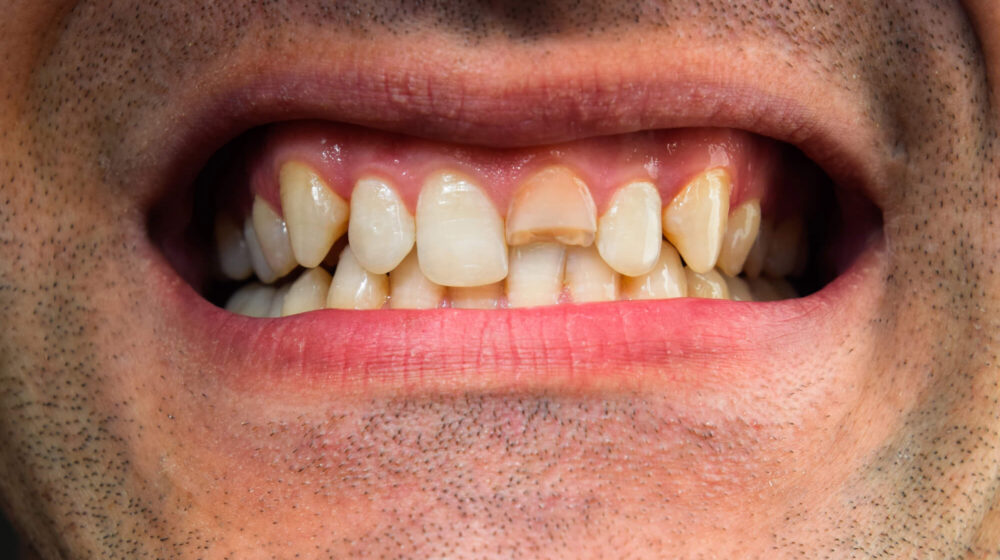
When you look in the mirror and think, “I have a bad smile,” you are rarely seeing just one problem. You usually notice a mix of tooth color, tooth shape, gum position, and how your lips and cheeks are supported. Dentists don’t see this as a personal failure. They see patterns. Changes in color, spacing, or alignment often point to deeper factors. What feels cosmetic is often structural.
Your tooth color, alignment, gum health, and even whether your face feels slightly “sunken” all form part of one bigger oral health picture. Past dental work, grinding, smoking, stress, medical conditions, and gaps in care leave subtle fingerprints over time.
This guide breaks down the most common patterns people label as a “bad smile,” from stains and wear to crowding, gum changes, bite problems, and deeper bone shifts.
By separating color from structure, and cosmetic concerns from health concerns, you can start to see which changes are surface-level and which deserve closer attention. Once you can name what you’re seeing, it becomes much easier to decide what, if anything, you want to change.
How To Decode What You See In The Mirror: Common “Bad Smile” Patterns And What Causes Them
When you call your smile “bad,” you roll many different details into one heavy label. A calmer starting point is to name what you actually see: color, edges, crowding, gums, and the shape of your lower face.
Once you separate those pieces, it becomes much clearer which parts are mainly cosmetic and which might be linked to gum, bone, or bite health that deserves attention.
Dental professionals find that when you can describe these details in plain words, a lot of shame lifts, and the conversation feels more equal. You are no longer saying “my smile is bad”; you are saying “my teeth are darker than I like” or “my front teeth are crowded,” which are specific problems you and a dentist can work on together.
You can start with simple questions like:
- Color: Do your teeth look more yellow, brown, gray, or patchy than before?
- Edges: Are they chipped, flattened, cracked, or uneven in length?
- Line‑up: Do you notice crowding, twisting, gaps, or misaligned teeth that flare forward?
- Gums: Are they red, puffy, very visible when you smile, or pulling back so teeth look longer?
- Shape of your lower face: Does the area around your mouth look more “collapsed,” shorter, or more wrinkled than it used to?
Some of these changes are mainly surface-level and often reversible with basic dental hygiene habits (cleaning and good home care) and caused by common issues like soft dental plaque, mild gum inflammation, or stains from too much coffee or tobacco consumption. Tobacco users in particular tend to accumulate a breeding ground for bacteria on uneven surfaces of the teeth, soft dental plaque, or mild gum inflammation.
Others reflect deeper changes – worn tooth enamel, gum recession, bone loss, or missing teeth – that need proper dental care, not just whitening, fluoride treatments, or a new toothpaste.
Many adults notice patterns by life stage: crowding as a young adult, staining and wear in mid‑life, then more obvious gum line or bone changes later on.
Bringing a short note or a few phone photos to a consultation can make the visit feel more like a shared project and less like a test. That helps your dentist show you which concerns are mostly just oral cosmetic issues, which are medical, and which sit in between, so you can decide together what matters most to you.
Structural And Developmental Causes
Many smiles that look “bad” on the surface are really driven by how your teeth, jaws, and bite developed over time.
In those situations, whitening alone will barely move the needle. The real change comes from moving teeth, carefully rebuilding their shape, or, when tooth decay is prevalent, using implant‑supported teeth to rebuild the underlying support.
How Jaw Growth and Early Orthodontics Shape Your Smile
Some patterns start early. If your teeth were crowded, spaced, or rotated as a teenager, it often stems from genetic dental problems that were never addressed, or how your jaws grew, when baby teeth were lost, or extractions done to make room for braces. Those choices and growth patterns shape how evenly your teeth show, whether the smile line follows your lip, and how well your lips are supported as you age.
The Hidden Impact of Your Bite on Appearance and Comfort
Your bite – the way upper and lower teeth meet – also plays a quiet but powerful role. Deep overbites, underbites, and crossbites can make front teeth look very prominent or almost hidden. The same bite issues can strain your jaw joints and muscles, leading to clicking, tightness, or headaches you may never have connected to your smile.
When Facial Structure Influences How Your Smile Looks
Facial structure matters too. A “gummy smile” can come from short teeth, extra gum tissue, or a jaw that sits slightly lower in the face. A “lipless” or “toothy” look can come from a thinner upper lip or teeth that sit further down in the jaw. These are patterns of growth and anatomy, not signs that you failed in taking care of your dental health.
The key idea is this: when tooth position, bite, and facial framework are the main drivers of how your smile looks, the most effective plans use tooth movement, rebuilding, or implant‑based solutions to change the underlying structure, not just the surface color.
That is why, for some adults with many failing or missing teeth, full-dental-arch implants can be life‑changing, as they allow a team to rebuild the framework that supports both function and appearance.
Gum and Bone Health Issues that Cause Changes in Your Smile
Changes in your gums and jawbone are often early oral health warnings, not just cosmetic details. Gum and bone problems can quietly shift how your smile looks years before a tooth is actually lost. Only an in‑person dental check-up, with X-ray examinations, intraoral cameras, or 3D imaging, can show how advanced things really are, but learning the common warning signs helps you know when it is time to get checked.
Your gums and the bone underneath are the “frame” that holds your teeth in place and shapes the outline of your smile. When that frame is healthy, gums are pink, firm, and sit snugly around the teeth. When it is not, things start to look different long before there’s tooth decay that gets them loose or they fall out.
Early Gum And Bone Changes
Early gum disease, or gingivitis, often changes how your gums look and feel before anything hurts. In this phase of gingivitis progression, the bone around the teeth is usually still healthy, and a combination of good home oral hygiene and professional care can often calm things down quite quickly. Spotting these changes early keeps orthodontic treatment smaller and less costly.
Some early signs to watch for include:
- Red, shiny, or puffy gums
- Bleeding when you brush or floss
- Bad breath that does not improve with normal cleaning
Bad breath is a common oral health issue that can temporarily be caused by poor oral hygiene and food particles. However, chronic bad breath, also known as halitosis, is different and is characterized by persistent bad odor or foul odor sometimes described as smelling like rotten eggs. This may signal underlying medical conditions such as acid reflux or metabolic disorders, as well as signal odor-causing bacteria building up below the gum line. Left untreated this can progress into more serious gum disease if not treated early.
At this stage, a focused cleaning plan at home and in the office can often turn things around in your oral health. Many people are relieved to hear that because these changes are common and very treatable. Acting at that moment usually prevents root surface decay and lasting damage to the bone that holds your teeth, which means your smile has a much better chance of staying stable.
To add, keeping your mouth moist matters here too. Reduced saliva production, whether from certain medications, mouth breathing with your mouth open, or health conditions, means less saliva to rinse away debris, leaving bacteria with more opportunity to cause damage. A dry mouth is one of the more overlooked common culprits behind both gum problems and bad breath.
Advanced Warning Signs
If inflammation and plaque buildup persist for months or years, it can progress to periodontal disease and damage the bone that supports the teeth. That is when you start to see more worrying changes in the mirror, even if nothing hurts yet.
You might notice:
- Gums pulling back (recession), so teeth look longer
- Dark “black triangles” between teeth where gum used to be
- Front teeth that flare out or drift, changing gaps and overlap
Conditions like diabetes, some autoimmune diseases, and habits like smoking and drinking coffee all make gum disease more likely and more severe.
Many blood‑pressure, anxiety, depression, and allergy medicines also dry the mouth, which raises your risk for deteriorating tooth enamel and cavities along the gumline and between teeth. If you notice several of these signs together, a prompt exam is important to protect both your teeth and your overall health.
Because gum disease is often painless until it is advanced, people are often surprised when a dentist shows them bone loss on an X-ray examination. The take‑home message is simple: changes in your gum line, tooth length, tooth sensitivity, and tooth spacing are often health signals, not just aesthetic quirks. If you see those patterns building, it is worth getting a proper look rather than waiting until something hurts.
Schedule Your Free Consultation
Habits And Lifestyle Causes That Stain, Erode, And Age Your Smile
Everyday habits over the years can darken, chip, and shorten teeth, making a healthy mouth look older and more tired than you feel inside. The encouraging news is that changing a few of these patterns and treating tooth decay and gum issues in the right order often has a bigger impact than people expect.
Some common contributors (each one a higher risk factor for both decay and oral health issues) include:
- Smoking or vaping: Stains teeth, dries the mouth, and slows blood flow to the gums, so the smile often looks darker and older.
- Frequent sugary or acidic drinks: Sipping sodas, energy drinks, juices, or sweet coffees for hours erodes tooth enamel and feeds decay along the smile line, creating noticeable tooth discoloration.
- Slow sipping of coffee, tea, or red wine: Long drinking sessions let dark pigments stick to plaque and rough enamel, creating stubborn stains.
- Grinding or clenching (bruxism): Day‑time clenching and night‑time grinding flatten and chip teeth so they look shorter, squarer, and more worn.
- Rushed or irregular cleaning: Skipping flossing, brushing less than twice a day, or missing professional cleanings lets soft plaque harden into yellow‑brown tartar.
If you recognize several of these patterns, it does not mean you have “ruined” your smile. It does mean your mouth has had to cope with more stress than it would like.
A thorough cleaning, some realistic habit changes, and a sensible sequence, for example, treating decay and gum inflammation before whitening, can give you a healthier, fresher‑looking smile than you may think possible. A water flosser can also be used alongside brushing can help remove stubborn plaque and a tongue scraper can remove debris from the uneven surface of the tongue where odor-causing bacteria tend to accumulate. All of this is important, especially knowing that eating certain foods like garlic and onions, or eating foods high in sugar without flossing regularly, also means you’re more likely to trap food particles that feed the bacteria causing bad breath.
A dentist who treats a lot of full‑mouth cases will often start by calming anything active: infections, deep decay, and sore gums. Once the foundation feels steadier, they will talk with you about how much of the surface story you want to change with whitening, bonding, veneers, or new implant‑supported teeth.
That way, each cosmetic step you choose has a healthier base under it.
When Your Smile Problem Isn’t Just About Teeth
How you feel about your smile often shapes your life more than you realize. Many adults quietly avoid photos, cover their mouths when they laugh, speak less in meetings, or hold back from dating and social events because they are worried about their teeth. Dentists hear these stories every day, and they know confidence is as real a part of treatment as any X‑ray.
Dental anxiety and past negative experiences are very common reasons people stay away from care for years. So are money worries, caring for others first, or simply not having a convenient, trusted dentist nearby. Over time, these very human reasons can lead to more visible problems:
- broken fillings,
- missing teeth,
- swollen gums, or
- dentures that do not fit well.
By the time you feel ready to ask for help, it can seem as if everything went wrong at once and led to a crooked smile.
It is also possible for your self‑criticism to be louder than reality. If people around you say your teeth look fine while you fixate on tiny flaws, it may help to talk about body image or anxiety with a health professional as part of your plan. Your smile lives in your mind as much as in your mouth.
A good dental team will help you untangle which concerns are mainly clinical, which are cosmetic, and which are more about confidence and past experiences. It can feel vulnerable to bring all of this up, but the right practice will welcome the full story, not just the quick clinical facts.
The point is not to label you. It is to show that a “bad smile” almost always sits at the meeting point of biology, habits, life events, and feelings, and you deserve support on all of those fronts, not judgment.
From Causes To Correction: How Dentists Match Problems To Treatments
Once you are in the chair, dentists do not see “good” or “bad” smiles. They see patterns they can sort and treat. Cosmetic dentistry usually groups these patterns into a few simple categories and then matches each with the right type of care. That whole‑mouth view helps protect health, improve appearance, and respect your timeline and budget, especially if you already have several failing or missing teeth.
They will often sort issues into buckets such as:
- Color and surface problems (stains, early decay, worn enamel)
- Gum and bone problems (inflammation, recession, bone loss)
- Alignment and bite problems (crowding, gaps, overbite, or underbite)
- Missing or badly damaged teeth
- Comfort and function (chewing, speech, jaw joint issues)
Reversible vs Structural Issues that Can Be Fixed
- Reversible issues such as surface staining or mild gum inflammation might be tackled first with cleaning, polishing, whitening, and better home care. For surface-level breath concerns, a dentist may recommend routine dental exams with professional cleaning, alcohol-free antibacterial mouthwash, fluoride toothpaste to protect enamel at the gum line, and sugar-free gum to stimulate saliva between meals — since chewing sugar-free gum is one of the simplest ways to keep your mouth clean and maintain fresher breath throughout the day.
- Structural issues, from worn or broken teeth to significant gum recession, major crowding, or missing teeth, often need restorative or orthodontic care. When many teeth are failing or dentures are unstable, implant‑based solutions can become the most predictable long‑term option for strength, comfort, and confidence.
Then Distinguish Between The “Now” or “Later” Issues
A thoughtful dentist will also help you sort “now” from “later.”
- Sudden pain, swelling, loose teeth, or fast changes in how your teeth meet usually live in the “now” box.
- Long‑standing appearance worries that do not involve pain can be planned more flexibly.
If several serious problems have built up at once, stepping back to design a whole‑mouth plan, which may include implants, bridges, or well‑made dentures, often gives you a clearer, calmer path forward instead of a string of short‑term fixes.
Schedule Your Free Consultation at 4M Dental Implant Center Today
A free consultation is often the easiest way to turn a vague “bad smile” worry into a clear, personal plan with a team that sees the whole picture.
At 4M Dental Implant Center, your visit usually begins with a calm conversation about what you see, how it affects your daily life, and any medical or dental history that might be involved.
From there, a gentle exam and, when appropriate, modern imaging show gum and bone support and hidden problems like tooth decay or overcrowding.
You leave with an honest outline of what is urgent, what can wait, and your main options – from cleaning and repair through to full‑arch, implant‑supported teeth, so you can decide, in your own time, how you want your smile and health to change next.
Request a free consultation with 4M today and start looking at your smile as a promise and not just a “bad” one.