
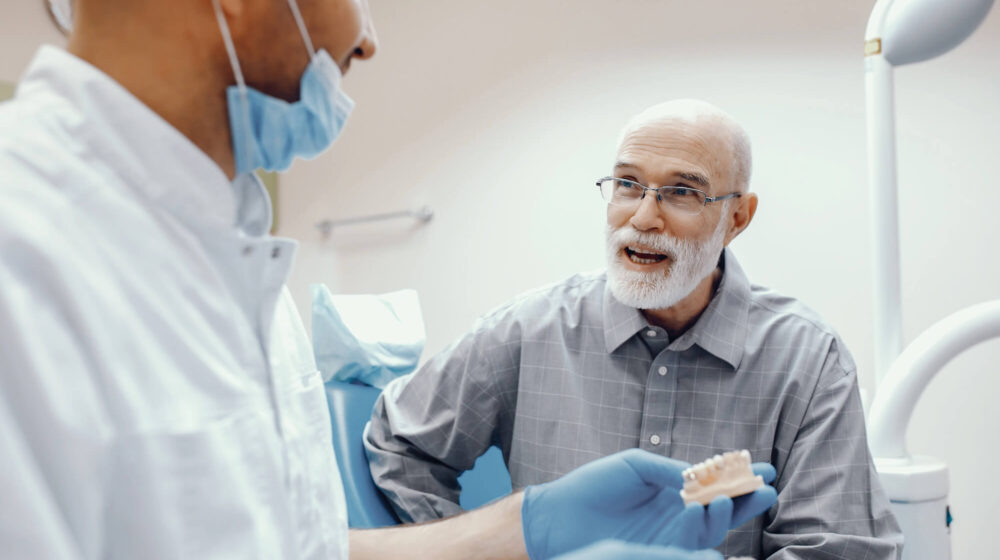
Tooth loss is a common issue among seniors, but that doesn’t mean living with unstable dentures or avoiding your favorite foods has to be the norm. Thanks to remarkable advancements in implant dentistry, seniors today have more reliable, long-lasting solutions than ever before. However, one critical question remains: Can seniors safely get dental implants?
The answer is a confident yes: dental implants are not only safe for elderly patients, but they are often the most effective solution for restoring bite power, preventing jawbone collapse, and improving overall oral health and quality of life. Backed by modern dental technology, the success rate of elderly dental implants now rivals that of younger demographics.
In this post, we’ll explore why dental implants for seniors are becoming the gold standard in restorative dentistry, what makes someone a good candidate, and how 4M Dental Implant Center delivers safe, same-day solutions tailored for every patient, regardless of age.
Why More Seniors Are Considering Dental Implants
For many elderly patients, the journey to tooth replacement starts with frustration, loose dentures, uncomfortable partial dentures, or flippers that don’t allow for full bite strength or confident social interactions. Traditional dental care options, like fixed bridges or adherent dentures, may help temporarily but often come with recurring issues like slipping, wear, and ongoing maintenance with denture cleaner or messy adhesives.
Here’s why more seniors are turning to implant-supported solutions like the 4M Smile System, full mouth reconstruction, and fixed provisional protocols:
- Long-Term Durability and Comfort: Unlike crowns or fixed bridges that rely on adjacent teeth, dental implants are anchored directly into the jawbone using titanium posts that mimic the root of a natural tooth. This process, known as osseointegration, helps maintain jaw bone density and prevents the facial collapse often seen in long-term denture users.
- Improved Quality of Life: The difference isn’t just physical, but emotional and social. Being able to speak clearly, eat steak, or bite into an apple again can dramatically boost a senior’s living standards and confidence. For many, this is the first step toward regaining not just their smile, but their lifestyle.
- Safer Than Ever for Older Adults: Thanks to modern techniques, today’s implant dentists can deliver safe, predictable results even for patients with medical conditions like osteoporosis, low bone mineral density, or those taking medications that may affect blood flow or healing. In fact, studies show that implant survival rates in seniors remain high, especially when dental hygiene is maintained through routine dental cleanings and post-operative care from qualified dental professionals at top-tier dental clinics.
- Advanced Imaging and Planning: With 3-D imaging, intraoral scanning, and advanced digital software, even patients with prior bone loss can often qualify for treatment through bone grafts or implant-supported bridges. At 4M, these procedures are mapped out with precision to ensure the highest success rates and minimal post-operative issues such as swelling or stitches.
Are Dental Implants Safe for Seniors?
Yes—dental implants are absolutely safe for seniors, including those in their 70s, 80s, and even beyond. In fact, age alone is not a disqualifier for implant surgery. What truly matters are specific patient- and implant-related factors, such as bone density, overall oral health, and any pre-existing medical conditions that may impact healing or osseointegration.
Unlike older surgical methods, today’s implant dentistry is minimally invasive, supported by digital planning tools and advanced protocols that dramatically improve comfort, predictability, and long-term success, even for patients with a history of gum disease, tooth loss, or dental extractions.
Is There an Age Limit for Dental Implant Surgery?
There is no upper age limit. In fact, the American Academy of Implant Dentistry and the American Association of Oral and Maxillofacial Surgeons both agree that elderly patients can undergo dental implant surgery safely, provided they are healthy enough for routine outpatient procedures. It’s common for patients in their 70s, 80s, and even 90s to benefit from full mouth arch solutions that restore bite power and improve quality of life.
What About Common Health Concerns Like Osteoporosis?
Osteoporosis, which affects bone mineral density, is common among seniors, especially postmenopausal women. While it can impact jawbone density, it doesn’t automatically disqualify someone from receiving implants. Thanks to innovations in implant geometry, and procedures like bone grafts, even patients with compromised bone structure can become candidates with the right treatment plan.
In fact, 4M Dental Implant Center often works with seniors through advanced techniques that ensure bone healing and fast integration of titanium implants with the jawbone.
What Medications Might Affect Implant Success?
Certain medications—such as blood thinners, bisphosphonates, or corticosteroids—can affect blood flow, healing, or increase the risk of implant failure.
However, this doesn’t mean implants are off the table. It simply means your implant dentist must coordinate closely with your healthcare provider to assess patient demographics, review medication history, and develop a protocol tailored for long-term durability and safety.
With the right sedation dentistry approach and pre-operative planning, many seniors with complex medical conditions can still undergo implant placement with predictable success.
Are There Risks of Complications?
As with any oral surgery, there are some risks, such as infection, slow healing, or implant rejection. These are rare, especially when performed by experienced providers like those at 4M Dental Implant Center.
Pre-existing conditions like periodontal disease, poor dental hygiene, or heavy tobacco use may increase risks but can often be managed through preparatory treatments, including dental cleanings, bone grafts, or stitch-free flapless techniques.
We help reduce marginal bone level loss and ensure high implant survival rates across all age groups if we address these conditions and variables early.
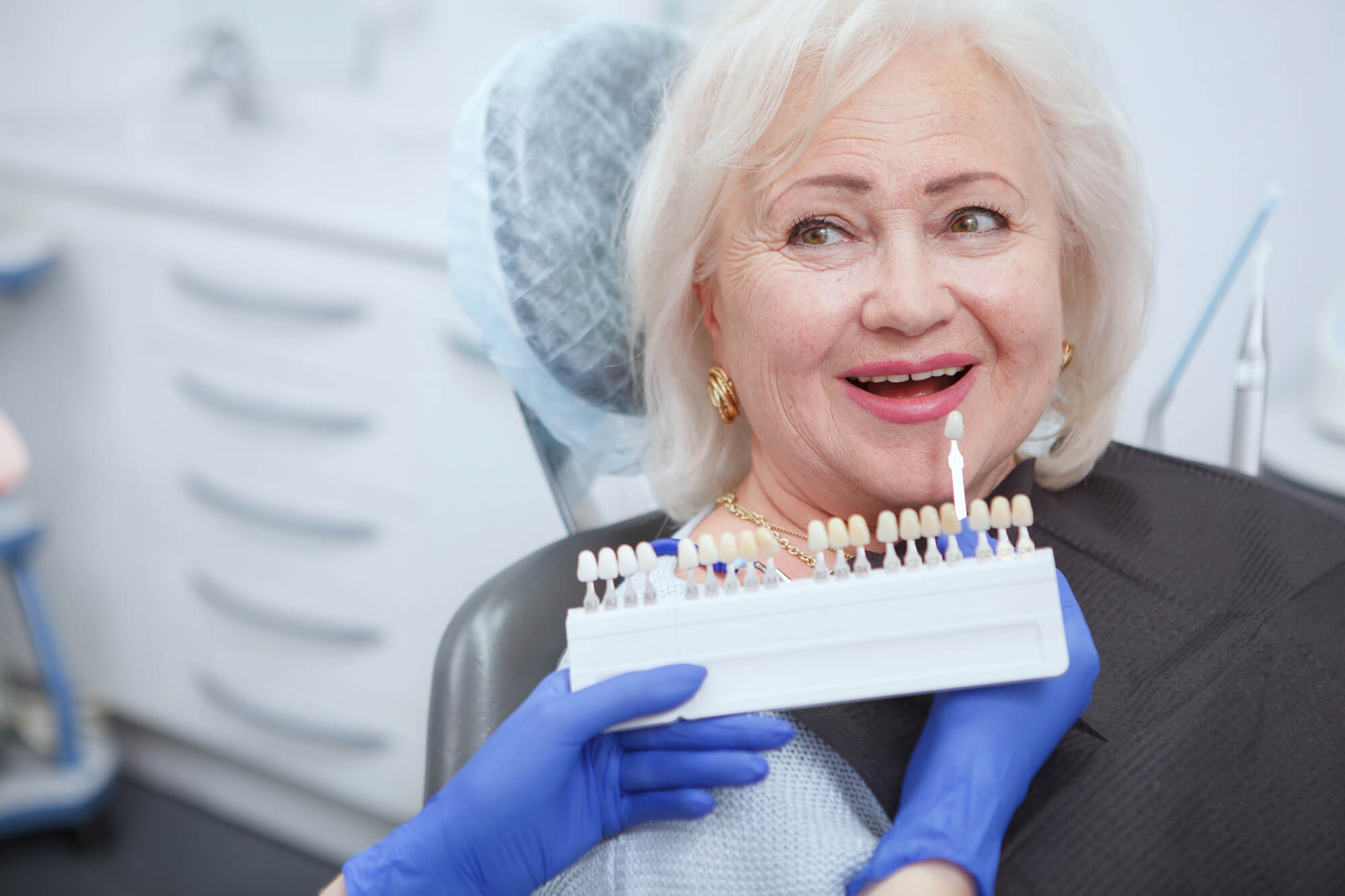
What Factors Determine if a Senior Is a Good Candidate?
While implants are widely successful for seniors, not everyone is an immediate candidate for this dental procedure. At 4M Dental Implant Center, we conduct a comprehensive evaluation, both medical and dental, to ensure every patient is set up for long-term success.
Let’s explore the most important factors that determine candidacy for elderly dental implants.
Overall Health and Medical Conditions
Chronological age isn’t nearly as important as your health status. Seniors with controlled medical conditions like high blood pressure or diabetes can still qualify for implant surgery.
What matters most is:
- Ability to heal post-operatively
- Good oral hygiene and aftercare
- Monitoring and follow-ups to avoid complications
Patients who’ve had total knee replacement, heart valve replacements, or other implants may be familiar with post-surgical healing protocols, many of which also apply to implant dentistry.
Your medical history, including medications, is carefully reviewed. Drugs affecting blood flow, bone metabolism, or immune response (such as corticosteroids or bisphosphonates) can impact osseointegration but can often be managed with a customized treatment plan.
Jawbone Density and Bone Quality
Strong, stable jawbones are key to supporting titanium implants. Over time, tooth loss, periodontal disease, or prolonged use of partial dentures or adherent dentures can lead to jaw collapse and loss of bone density.
This is why dental X-rays, 3D scans, and sometimes lightwand-guided 3D imaging are used to assess:
- Marginal bone levels
- Bone mineral density
- Implant geometry compatibility
If your bone density is low, bone grafting therapy and regenerative treatments like PRP (Platelet-Rich Plasma) and PRF (Platelet-Rich Fibrin) may be recommended to rebuild bone volume and ensure the stability of the artificial tooth.
At 4M, we specialize in solutions like implant-supported bridges and full mouth arch reconstructions, even for patients previously told they weren’t candidates.
Gum Health and Dental Hygiene
Healthy gums are essential for the success of any implant procedure. Seniors with active gum disease, gingivitis, or a history of periodontal disease must first undergo treatment to reduce bacterial load and stabilize the gum tissue.
A strong foundation of dental care, including proper brushing, routine dental cleanings, and follow-ups with a dental professional, ensures your implants last for decades, not just years.
If you’ve lost teeth due to infection or poor hygiene, your implant dentist may also evaluate:
- The condition of your remaining crowns or teeth
- Prior dental extractions
- Presence of any systemic infection or inflammation
Lifestyle Considerations and Tobacco Use
Tobacco use is a significant risk factor for implant failure.
- It reduces blood flow.
- Compromises healing.
- And increases the likelihood of infection and osseointegration failure.
While a smoking habit doesn’t automatically disqualify you, we strongly encourage cessation—especially during the healing process.
Additionally, your ability to follow post-op instructions, maintain oral hygiene, and attend dental clinic visits plays a major role in your candidacy and the long-term durability of the implants.
Schedule Your Free Consultation
Benefits of Dental Implants Over Dentures for Seniors
Many seniors spend years struggling with traditional dentures, only to find themselves limited by poor fit, discomfort, or a fear of embarrassment. While dentures may seem like a more affordable option at first, they often come with hidden costs: relines, replacements, adhesives, and an emotional toll.
Dental implants, by contrast, offer a fixed, long-term solution that restores function, confidence, and facial appearance, often improving both emotional well-being and nutritional health.
Better Bite Power and Chewing Efficiency
Implants are anchored directly into the jawbone through a process called osseointegration, which allows for far greater bite power than dentures or flippers. Whether it’s steak, apples, or crunchy vegetables, implant-supported prosthetic teeth allow elderly patients to enjoy the foods they love without fear of slipping or pain.
This is especially important for patients whose oral health affects digestion, blood sugar, or medications requiring food intake.
Prevention of Bone Loss and Jaw Collapse
One of the biggest long-term drawbacks of dentures is that they do nothing to prevent jawbone deterioration. In fact, long-term use of partial dentures, adherent dentures, or fixed bridges can accelerate bone resorption, leading to jaw collapse, facial sagging, and speech issues.
By contrast, titanium rods in implants stimulate the jawbone and help preserve bone mineral density, even in patients with mild osteoporosis. This maintains both function and facial structure, providing a more youthful and natural look.
Stability, Security, and Freedom
Forget about denture cleaner, adhesives, or awkward social moments. Dental implants remain firmly in place whether you’re laughing, eating, or talking with loved ones. There’s no need to remove them at night or clean them in a cup by the sink.
With full-mouth dental implants, many elderly patients regain a level of freedom they haven’t felt in decades.
Improved Speech and Social Confidence
Loose dentures often affect speech clarity and cause slurred or muffled words. Implant-supported bridges and fixed provisional protocols restore full oral function, letting patients speak clearly and confidently, especially in social, professional, or family settings.
This seemingly small change often produces dramatic gains in quality of life, self-esteem, and day-to-day living standards.
Long-Term Durability and Cost Effectiveness
While dentures may seem cheaper up front, their ongoing maintenance, replacement, and discomfort can add up.
Dental implants, on the other hand, are designed for long-term success—with some lasting 25+ years when properly cared for.
At 4M Dental Implant Center, our implant dentists use advanced implant design tools, 3D scans, PRP and PRF, and precise placement techniques to optimize healing and durability—often achieving immediate loading results that reduce the need for multiple surgeries or extended healing periods.
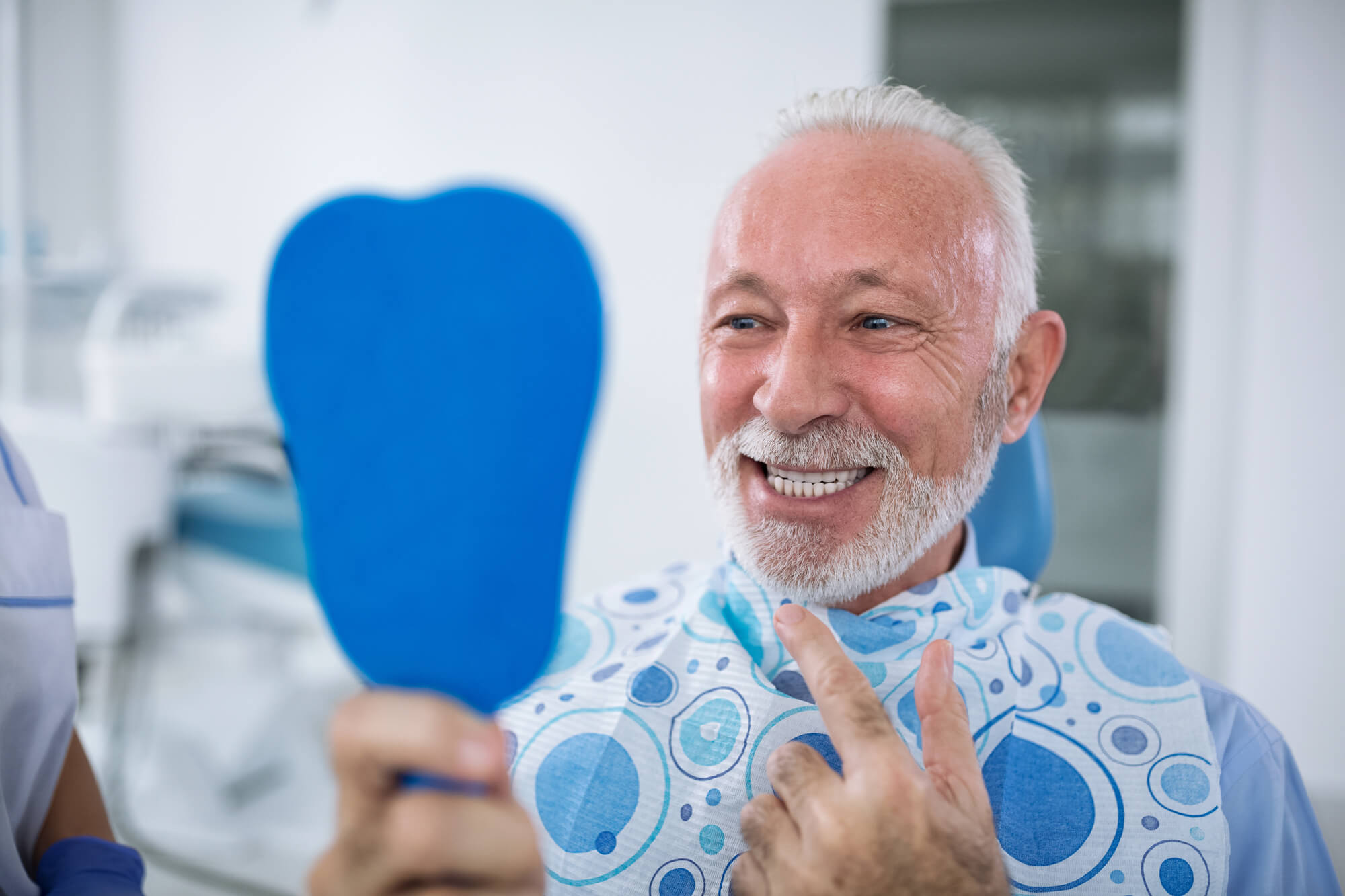
What Implant Solutions Work Best for Seniors?
When it comes to elderly dental implants, the key is personalization. Seniors have unique considerations, including jaw bone density, existing tooth loss, past oral surgeries, and sometimes medications that affect healing.
That’s why 4M Dental Implant Center offers several advanced implant options tailored to seniors, combining comfort, speed, and long-term success.
All-on-X Dental Implants
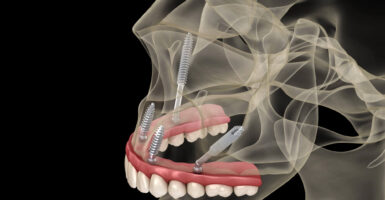
For seniors missing most or all of their teeth, full mouth arch solutions, such as the All-on-X or All-on-4 technique, are ideal. These procedures place four or more titanium implants into the jawbone, supporting an entire row of prosthetic teeth.
Unlike the traditional denture implant procedure, these fixed bridges don’t move, require no adhesives, and include immediate loading, meaning patients leave surgery with temporary fixed teeth the same day.
At 4M, our proprietary systems include:
- 4M Smile in 24™
- 4M ForeverSmile™
- 4M Removable Smile™
They deliver an outcome with unmatched precision using 3D scans, implant geometry modeling, PRP and PRF for enhanced healing, and sedation dentistry for a stress-free experience.
Implant-Supported Dentures
For some seniors who prefer a removable option but want greater stability, implant-supported dentures are a middle ground. These use 2–4 implants per arch to “lock in” a removable denture.
This drastically reduces movement and the need for denture cleaner adhesives and preserves the jawbone more effectively than traditional dentures alone.
It’s a flexible, more budget-friendly option that offers improvement in oral health, speech, and chewing power over traditional dentures. However, it is still an inferior alternative to full-mouth dental implants.
Single-Tooth Implants and Implant-Supported Bridges
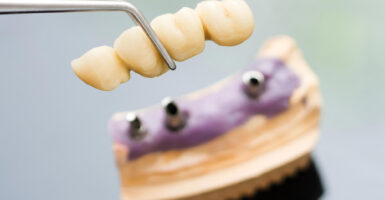
For elderly patients with isolated tooth loss, a single implant or implant-supported bridge can restore the gap without compromising surrounding teeth. These are ideal when dental extraction or trauma affects one or a few teeth, but the surrounding bone density and gum tissue remain healthy.
Each case is provided with:
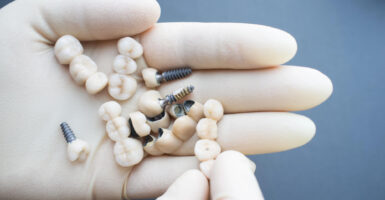
- A titanium post (implant)
- A custom abutment placement
- A natural-looking, custom-made crown
With the help of digital 3-D images and advanced imaging software, we ensure the highest precision and long-term durability.
Solutions for Seniors with Low Bone Volume
Even if you’ve been told you’re “not a candidate” due to bone loss, 4M Dental Implant Center may have a solution.
Our team can use:
- Bone grafts
- Regenerative treatments like Platelet-Rich Plasma and PRF Platelet-Rich Fibrin
- Ridge augmentation and sinus lift techniques
Combined with fixed provisional protocols, we often help elderly patients qualify for implants, even those previously turned away by other dental clinics.
Schedule Your Free Consultation
What Happens During the Implant Process?
Getting dental implants as a senior doesn’t have to be overwhelming. At 4M Dental Implant Center, we’ve streamlined the entire experience, from your first consultation to your new smile reveal, to prioritize comfort, clarity, and long-term success.
Here’s a step-by-step look at what elderly patients can expect during their implant journey.
Step 1 – Initial Consultation and Digital Diagnostics
Your journey begins with a comprehensive 4M Smile Assessment. This visit includes:
- Full dental and medical history review
- Visual and tactile oral exam
- X-rays, high-resolution CT, and 3D scans
- Evaluation of jawbone density, bone mineral levels, and gum health
- Identification of any oral diseases, such as gum disease or periodontal disease
We use advanced intraoral implant geometry mapping to plan your treatment with millimeter precision, far beyond what traditional impressions can offer.
For seniors with pre-existing conditions or complex medications, our team also collaborates with your physician to ensure safe, effective care.
Step 2 – Treatment Planning and Sedation Options
Once you’re confirmed as a candidate, we’ll customize your plan based on:
- Number of teeth missing
- Quality of jawbones
- Need for bone grafts or dental extractions
- Desired result: full mouth arch solution, implant-supported bridge, or single-tooth implant
You’ll also choose your sedation dentistry option, including IV sedation or oral sedation, designed to keep you relaxed and anxiety-free throughout your procedure.
Step 3 – Implant Surgery and Temporary Teeth
On the day of your implant surgery, your implant dentist will:
- Place titanium implants into the jawbone
- Perform bone grafting if needed
- Suture minimally invasive stitches, if applicable
- Deliver immediate loading (same-day temporary teeth) in most cases
Thanks to digital planning, regenerative treatments, and precise surgical guides, the entire process is smoother and faster.
Many elderly patients are surprised at how minimal discomfort is post-op and how quickly they can resume light activity.
Step 4 – Healing, Integration, and Final Prosthetics
During the healing phase, osseointegration begins, which is where the titanium implant fuses with your jawbone, forming a stable foundation for your permanent crowns or prosthetic teeth.
This period typically lasts 3–6 months, during which we’ll monitor:
- Implant survival
- Marginal bone levels
- Overall healing and gum tissue response
- Any lifestyle factors, such as tobacco use, that may affect success
Once healed, you’ll return for your final set of restorative prosthetics, crafted for natural aesthetics, proper bite power, and long-term durability.
Frequently Asked Questions About Dental Implants for Seniors
Choosing dental implants is a big decision for seniors who may have unique health or lifestyle considerations. Below are answers to the most common questions we receive at 4M Dental Implant Center, based on decades of experience helping elderly patients restore their smiles.
Can Seniors in Their 70s or 80s Really Get Dental Implants?
Yes. Many of our patients are well into their 70s or 80s when they receive dental implants, and the success rates remain high. Chronological age is not a contraindication; what matters is your overall medical condition, bone density, and ability to heal post-surgery.
Even patients with chronic conditions like osteoporosis, controlled diabetes, or a history of tooth loss due to gum disease can often qualify.
What If I Have Bone Loss or Weak Jawbones?
If you’ve experienced jawbone deterioration from long-term denture use or periodontal disease, you’re not alone. Many seniors have low jawbone density, but options like bone grafting, PRP and PRF, ridge augmentation, and other specialized techniques still make implants possible.
How Long Do Dental Implants Last?
When properly cared for, dental implants can last 25+ years or more—often for life. Success depends on a combination of patient-related factors (like dental hygiene, medications, and tobacco use) and implant-related factors (like placement accuracy, material quality, and follow-up care).
We provide thorough instructions on cleaning, follow-ups, and hygiene, plus our 4M Smile Wellness Plan includes lifetime support to help maintain long-term success.
Are Implants Covered by Medicare or Dental Insurance?
Most dental implants are considered an elective procedure and are not covered by Medicare. However, some dental insurance plans may offer partial coverage, especially for medically necessary dental extractions or associated oral surgeries.
At 4M, we offer flexible financing options, including low monthly payment plans, to help make restorative dentistry affordable, regardless of insurance status.
Is the Procedure Painful?
Not at all. With sedation dentistry, most patients report little to no discomfort. Our surgeons are trained in local and IV sedation and gentle techniques to ensure a calm and anxiety-free experience.
You’ll rest comfortably during the procedure and receive post-op care instructions for a smooth recovery. Most seniors return to light activity within a day or two.
Is 4M Dental Implant Center Right for You?
If you’re a senior struggling with tooth loss, uncomfortable dentures, or worried about your jawbone health, it’s time to consider a permanent, life-changing solution.
At 4M Dental Implant Center, we specialize in implant dentistry for elderly patients, using the most advanced technologies available. We’ve helped thousands of patients—many with complex medical conditions, osteoporosis, or past implant failures—finally achieve stable, beautiful, and lasting smiles.
Our center proudly follows clinical protocols while tailoring care around each individual’s needs, medications, and lifestyle.
Here’s what sets 4M apart for seniors:
- Same-day full mouth arch solutions with immediate loading
- Compassionate care from experienced implant dentists
- Options for patients with low bone density or prior dental extractions
- Lifetime aftercare with hygiene support, follow-ups, and restorative dentistry maintenance
- Financing options for every budget
Most importantly, we don’t just fix teeth—we help restore your ability to eat, speak, and live confidently because your age shouldn’t limit your health, your smile, or your quality of life.
Take the First Step Toward Your New Smile
You deserve to feel confident when you look in the mirror. You deserve to enjoy your favorite foods again. You deserve to smile without hesitation.
Schedule your 4M Smile Assessment today and find out if you’re a candidate for safe, reliable, and lasting dental implants for seniors.

Reader Interactions