• Skip to main content
  • Skip to footer

4M Dental

America's Premier Dental Implants | 4M Dental Implant Center

  • Home
  • Dental Implants
  • Cosmetic Dentistry
  • General Dentistry
  • Locations
    • Las Vegas, NV
    • Long Beach, CA
    • Newport Beach, CA
    • Anaheim Hills, CA
    • Murrieta, CA
    • Palm Desert, CA
    • Riverside, CA
    • Valencia, CA
    • San Diego, CA
    • Glendale, CA
  • Cost & Financing
  • Gallery
  • Destination
  • About
855-999-6088
Free Consultation

Archives for September 10, 2025

Understanding Common Dental Implant Complications

September 10, 2025 by 4M Dental Implants Leave a Comment

Dental implant surgery has become one of the most reliable dental treatments in modern implant dentistry, with success rates exceeding 99% when proper surgical techniques, treatment planning, and patient cooperation are followed. Despite this high success rate, dental implant complications can still occur. These complications are not necessarily a reflection of the skill of the dental professional or surgeons involved.

Instead, they may arise from individual patient factors, medical conditions, healing responses, or extremely rare issues with materials such as the titanium screw, zirconia abutment, or prosthesis.

This guide explores the most common dental implant complications, their risk factors, and how they are treated or managed. It will also highlight the importance of proper jaw preparation, careful surgical protocol, and diligent post-surgical healing to ensure every artificial tooth, dental crown, or dental bridge supported by implants remains stable for years to come.

Why Talk About Dental Implant Complications?

For patients, it’s important to understand that while dental implants provide strong support from the bone and function as a permanent replacement for missing teeth, complications can develop if the surgical procedure or post-surgical aftercare is disrupted.

Conditions like peri-implantitis, bone loss, nerve damage, or sinusitis may develop due to poor oral hygiene, gum disease, smoking, or systemic medical conditions like diabetes, osteoporosis, or autoimmune disorders.

Recognizing risk factors early allows patients to partner with their dental surgeon in prevention and treatment.

What Are Dental Implant Complications?

Dental implant complications are any issues that interfere with the healing, stability, or long-term success of a dental implant after the surgical procedure. While dental implant surgery is designed to replace a missing tooth with a titanium implant post anchored in the jaw bone, complications can affect the integration process known as osseointegration.

When osseointegration is disrupted, the implant may fail to fuse properly with the bone, leading to implant mobility, discomfort, or eventual implant failure.

Complications can be grouped into two main categories:

  • Short-term complications – These occur shortly after implant placement and may involve infection at the implant site, sinus damage in the maxillary sinus, very rare allergic reactions to dental implant metal, rejection of the titanium screw, or problems with sedation or anesthesia. In rare cases, patients may develop swelling, bleeding, or nerve-related symptoms if the inferior alveolar nerve or trigeminal nerve is affected during surgery.
  • Long-term complications – These usually appear months or years after dental surgery. They include peri-implantitis (infection around the implant and gum line), progressive bone loss, loose implants due to insufficient bone density, or mechanical problems with the dental crown, prosthesis, or dental bridge placed on top of the implant. Long-term issues may also include sinus issues if the Schneiderian membrane was compromised during maxillary sinus surgery or sinus lift procedures.

Dental implant complications can arise from multiple factors; however, with proper planning, the use of 3D images for surgical planning, and adherence to surgical protocol, many of these complications can be avoided or treated successfully if they occur.
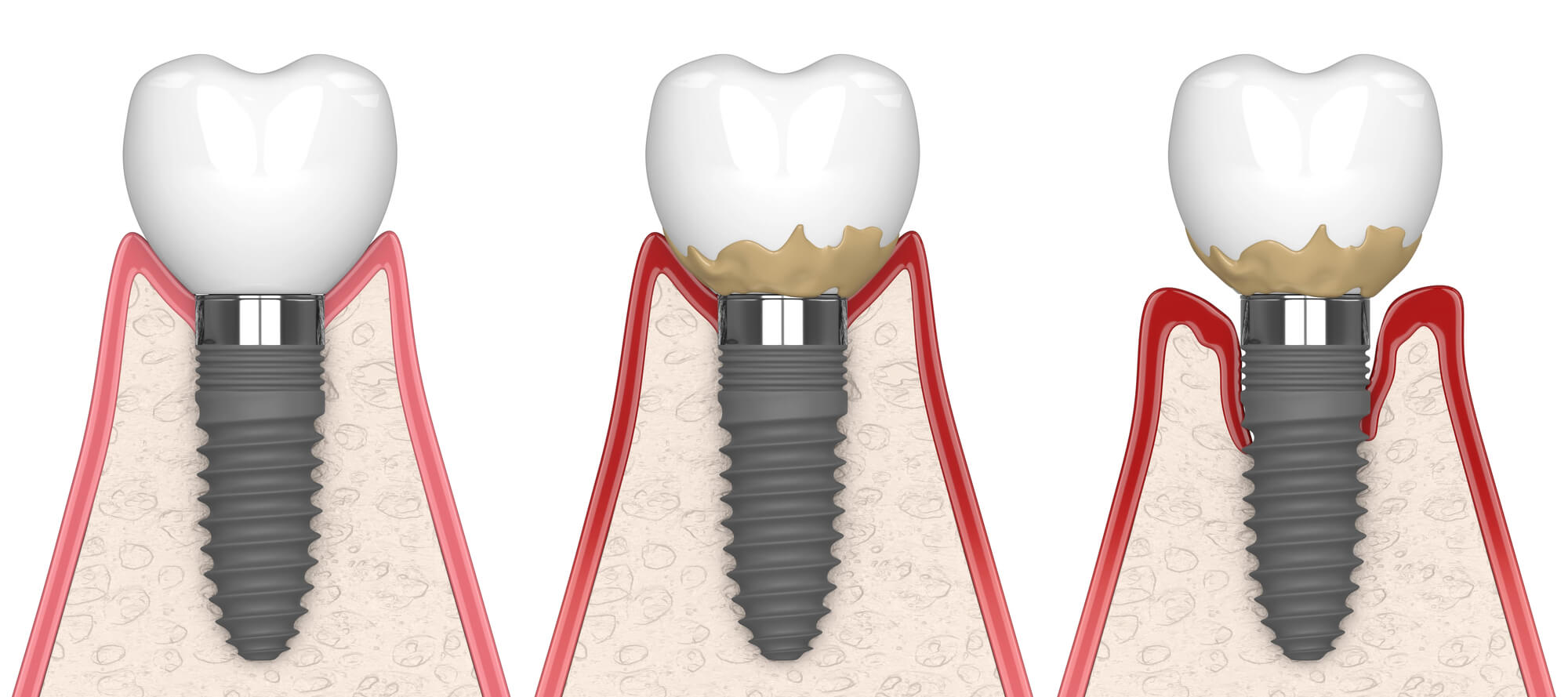
The Most Common Dental Implant Complications

Even with careful treatment planning, advanced surgical techniques, and experienced dental professionals, complications can occur after dental implant surgery. Below are the most common issues patients may face, along with causes, symptoms, and treatment approaches.

Infection and Peri-Implantitis

One of the most common complications following implant placement is infection at the implant site. Peri-implantitis is a condition where bacteria accumulate around the gum line and titanium screw, leading to inflammation, bone loss, and potential implant failure.

  • Risk factors: poor oral hygiene, untreated gum disease, smoking, diabetes, or autoimmune disease.
  • Symptoms: redness, swelling, tenderness, bleeding gums, or pus near the implant.
  • Treatment: early-stage infection may be treated with professional cleaning, antibiotics, and antibacterial rinses; advanced cases may require surgical procedures like bone grafting or implant replacement.

Implant Failure and Lack of Osseointegration

Dental implants rely on osseointegration, which is the natural process where the titanium implant post fuses with the jawbone. If this does not occur properly, dental implant failure can result.

  • Causes: low bone density, poor surgical protocol, medical conditions like osteoporosis or rheumatoid arthritis, smoking, or allergic reactions to implant metal.
  • Signs: implant mobility, persistent pain, or a loose implant that fails to provide stable support for the prosthesis.
  • Solutions: bone grafting or ridge augmentation to improve jaw preparation, replacing the implant, or addressing systemic medical conditions before re-attempting implant placement.

Bone Loss Around the Implant

Even if bone fusing is successful after the implant procedure, bone loss can still occur as a long-term complication and weaken implant support from the bone, threatening stability. It may occur gradually, sometimes unnoticed by the patient until the implant becomes loose.

  • Causes: peri-implantitis, excessive bite force, poor oral hygiene, gum disease, or inadequate jaw preparation.
  • Treatment: scaling and root planning, guided tissue regeneration, or bone grafting to restore bone density and support for the artificial tooth.

Nerve Damage

Improper implant placement in the lower jaw can cause nerve damage, especially to the inferior alveolar nerve or trigeminal nerve.

  • Symptoms: numbness, tingling, pain, or altered sensation in the lips, tongue, or chin.
  • Prevention: using CBCT 3D images for precise treatment planning and adhering to strict surgical protocol.
  • Management: nerve damage may resolve over time, but in some cases, surgical correction is required.

Sinus Complications

For implants placed in the upper jaw, there is a risk of sinus complications if the implant protrudes into the sinus cavity or damages the Schneiderian membrane.

  • Causes: insufficient jawbone height or inadequate bone density in the maxillary sinus area.
  • Complications: sinusitis, sinus infections, or chronic sinus issues.
  • Treatment: sinus lift procedures, bone grafts, or surgical correction to reposition or replace the implant.

Mechanical or Prosthetic Complications

Even when the implant integrates successfully, the artificial tooth or dental crown may experience problems.

  • Examples: chipped porcelain crowns, fractured zirconia, loose abutments, or instability in a dental bridge or denture attached to implants.
  • Causes: bite stress, faulty materials, or a misfit prosthesis.
  • Solutions: replacement of the dental crown, adjustment of bite alignment, or reinforcement of the prosthesis with stronger materials.

Risk Factors That Increase Complications

Although dental implant surgery has a very high success rate, certain patient-specific or procedural factors can increase the likelihood of dental implant complications. Identifying these risks early allows both the dental surgeon and patient to take preventive steps.

Smoking and Poor Oral Hygiene

Smoking restricts blood flow, delays healing at the implant site, and weakens support from the bone. Combined with poor oral hygiene, it increases the risk of peri-implantitis, gum disease, and eventual implant failure. Patients who smoke should quit before undergoing implant placement and commit to strict oral care after the surgical procedure.

Medical Conditions and Systemic Health Issues

Chronic illnesses such as diabetes, autoimmune disorders, rheumatoid arthritis, and osteoporosis can interfere with osseointegration and bone density. Autoimmune disease and other systemic conditions compromise the immune response, making infection more likely and reducing long-term implant stability. Careful treatment planning, including coordination with a patient’s medical provider, is essential.

Gum Disease and Pre-Existing Oral Health Issues

Untreated gum disease or infection near the gum line increases the risk of peri-implantitis and bone loss. Patients with gum disease should undergo treatment before dental implant surgery to reduce complications and improve implant success.

Low Bone Density or Inadequate Jawbone Support

If the jawbone lacks sufficient density or height, the implant may not achieve stable support. This is especially common in the posterior maxilla near the sinus cavity. Bone grafting, ridge augmentation, or sinus lift procedures may be necessary to create adequate support for the titanium screw or zirconia implant post.

Inexperienced Surgical Technique

Dental implant complications may also occur due to errors in surgical techniques, such as damaging the inferior alveolar nerve, improper jaw preparation, or violating the maxillary sinus or Schneiderian membrane. Working with experienced dental and maxillofacial surgeons who follow strict surgical protocol significantly reduces these risks.

Patient Age and Healing Capacity

Older patients may experience slower healing times due to reduced bone density, chronic medical conditions, or decreased immune response. While patient age alone is not a contraindication for dental implants, it can influence recovery and long-term implant stability.

Early Warning Signs of Dental Implant Failure or Complications

Not every ache or change in your mouth means an implant is failing, but certain signs may indicate problems with implant placement, bone integration, or surrounding gum tissue. If you experience any of the following, it’s best to contact your dental professional or oral and maxillofacial surgeon promptly. Early intervention can make a big difference in preserving your dental implants.

  • Persistent Pain or Throbbing: Mild discomfort after dental implant surgery is normal, but intense or worsening pain may suggest issues with osseointegration, surrounding tissue pressure, or even nerve damage near the inferior alveolar nerve or trigeminal nerve.
  • Swelling, Redness, or Inflammation: Some swelling is part of the natural healing process, but prolonged gum inflammation, redness, or bleeding around the implant post can indicate peri-implantitis or infection at the implant site.
  • Loose Implant or Wiggling Sensation: A properly placed titanium or zirconia implant should feel as secure as a natural tooth once healed. If your implant feels mobile, it may point to implant overload, bone loss, implant screw issues, or incomplete fusion with the jawbone.
  • Gum Recession or Visible Threads of the Implant: If gum tissue pulls back and you notice exposed metal threads near the gum line, it could be a sign of gum disease, bone deterioration, or failing support from the bone around the implant.
  • Difficulty Chewing or Biting Down Normally: Pain or discomfort while chewing—especially on harder foods—can suggest implant misalignment, implant mobility, or insufficient jaw preparation during the surgical procedure.
  • Bad Taste or Odor: A persistent bad taste or foul odor in the mouth may indicate bacterial infection, poor oral hygiene around the implant, or peri-implantitis.
  • Fever or General Malaise: In rare cases, untreated infection around an implant can cause systemic symptoms like fever, fatigue, or malaise. This requires immediate evaluation by a dental surgeon to prevent further complications.

Recognizing these signs early doesn’t always mean implant failure is inevitable, but it does mean you should act quickly. With timely treatment, many complications can be reversed, preserving your implant and protecting your long-term oral health.

How to Treat and Manage Dental Implant Complications

When dental implant complications occur, prompt diagnosis and treatment are essential to preserve the implant, protect surrounding bone and gum tissue, and maintain long-term oral health. Management strategies vary depending on the type and severity of the complication.

Early Detection Through Regular Follow-Ups

Routine checkups with a dental professional after implant placement are critical. Dental surgeons use clinical exams, X-rays, and 3D images to detect peri-implantitis, bone loss, or implant mobility early. Catching complications early often means simpler, non-surgical treatment.

Non-Surgical Treatments

Minor infections around the implant site can often be treated without additional surgery. Approaches include professional cleaning, antibiotic therapy, and improved oral hygiene practices to reduce bacteria at the gum line. For prosthetic complications, such as a loose dental crown or fractured zirconia prosthesis, simple repairs or adjustments may resolve the problem.

Surgical Interventions

More advanced complications sometimes require corrective surgical procedures:

  • Bone grafting or ridge augmentation can rebuild jawbone density when bone loss threatens implant stability.
  • Sinus lift surgery may correct issues in the maxillary sinus cavity or Schneiderian membrane.
  • Implant replacement or revision is sometimes necessary if the titanium screw or implant fails to integrate with the jaw bone, leading to dental implant failure.

Compliance With Surgical Protocol

Following all post-surgical instructions, including prescribed medications, use of ice packs, and rest recommendations, is essential. Patients should also avoid strenuous activity immediately after dental surgery, as this may interfere with healing and implant stability.

Proper Aftercare to Prevent Complications

Successful management of complications depends not only on the dental surgeon but also on the patient. Quitting smoking, controlling medical conditions like diabetes, and practicing excellent oral hygiene are critical steps in reducing the risk of recurrent issues.

Following the surgical protocol, including recommended restrictions after surgery, helps ensure long-term success.

  • Daily Oral Hygiene: Keeping the implant site clean is essential to prevent peri-implantitis and bone loss. Patients should brush gently around the gum line, floss daily, and use antibacterial rinses as recommended by their dental professional. Avoiding plaque buildup is one of the most effective ways to protect osseointegration and long-term implant stability.
  • Lifestyle Choices and Habits: Smoking is one of the strongest risk factors for implant failure because it reduces blood flow, slows bone healing, and increases the likelihood of infection. Excessive alcohol consumption also delays recovery. Patients should avoid smoking and minimize alcohol intake during healing to protect the titanium screw and post, and surrounding jaw bone.
  • Nutrition and Healing Support: A soft-food diet immediately following the surgical procedure helps protect the implant site. Nutrient-rich foods that support bone health, such as those high in calcium and vitamin D, promote osseointegration and stability of the implant post. Hard or sticky foods should be avoided until the dental surgeon confirms the implant is secure.
  • Professional Follow-Ups and Maintenance: Regular visits to the dental surgeon are critical. These appointments allow professionals to monitor bone density, check for implant mobility, and ensure the dental crown, prosthesis, or dental bridge is fitting correctly. Professional cleanings reduce bacterial risk at the gum line and around the implant.

Awareness, Prevention, and Lasting Success

Dental implant surgery is one of the most successful and predictable dental treatments available, with success rates above 99%. Still, complications such as peri-implantitis, bone loss, implant mobility, nerve damage, or sinus issues can occur in certain situations. Factors like bone density, gum disease, smoking, and systemic medical conditions such as diabetes or autoimmune disorders influence these risks.

With proper treatment planning, advanced surgical techniques, and patient cooperation in post-surgical aftercare, most dental implant complications can be prevented or effectively managed.

At 4M Dental Implant Center, our dental professionals follow strict surgical protocols and use advanced imaging, 3D treatment planning, and state-of-the-art surgical techniques to ensure stability, osseointegration, and long-lasting results.

If you’re considering dental implants—or need help restoring confidence in your smile—schedule a consultation with 4M today and take the first step toward a healthier, brighter future.


Frequently Asked Questions About Dental Implants Complications

What are the most common dental implants complications?

Dental implants complications may include infection at the implant site, peri-implantitis, bone loss, nerve injury, and implant fractures. Problems with implant placement or improper implant surgery can also cause inflammation and bone loss around the implant. These issues may develop shortly after the dental implant procedure or years later as long-term potential complications.

What risk factors can increase the chance of dental implant failure?

Implant failure is often linked to poor oral hygiene, gum disease, smoking, autoimmune disorders, osteoporosis, or other medical conditions that interfere with bone healing and blood flow. Insufficient bone density, improper implant placement, or teeth grinding may also increase the risk of complications. Patients with unhealthy gums or existing teeth problems should address them before dental implant surgery to minimize risks.

How do dental implants work to replace missing teeth?

Dental implants act as a permanent tooth replacement option. During the dental implant procedure, an oral surgeon or maxillofacial surgery specialist places a titanium metal post into the surrounding bone of the upper jaw or lower jaw. As new bone growth occurs, the implant fuses with the jaw through osseointegration, supporting an artificial tooth, dental crown, or replacement tooth. This makes dental implants function like natural teeth while protecting other teeth and maintaining bone density.

What can patients do to improve healing after implant surgery?

After implant treatment, patients should follow their surgeon’s instructions to ensure a smooth healing process. Eating soft foods, practicing good oral hygiene, and avoiding smoking or alcohol will support bone growth and reduce the risk of infection at the implant site. Using antibacterial rinses and keeping the surgical site clean helps prevent plaque buildup and gum tissue inflammation. Regular follow-ups with an experienced dentist or oral and maxillofacial surgery specialist help detect potential risks early.

How can dental implant complications be treated or prevented?

If a dental implant fails due to bone loss, gum disease, or improper placement, treatments may include a bone graft, sinus lift for the sinus cavity, or replacement of one implant with a new dental implant placement. Managing lifestyle factors, reviewing medical history, and ensuring sufficient bone density are key steps in minimizing risks. With careful implant procedure planning, an experienced dentist, and proper aftercare, most dental implants work successfully and provide long-lasting results in replacing missing teeth.
Filed Under: Uncategorized

Robotics vs. Traditional Methods in Implant Surgery

September 10, 2025 by 4M Dental Implants Leave a Comment

Dental implants have become a cornerstone of modern implantology, offering patients predictable solutions for tooth replacement, bone preservation, and long-term oral health.

Lately, however, there’s been growing talk around advanced dental implant robotic systems and computer-assisted implant surgery. While traditional surgical methods remain the global standard, the arrival of surgical robots and dynamic computer-assisted surgery systems has sparked growing interest among clinicians, researchers, and patients alike.

We decided to take some time to explore what robotic dental implant surgery is, how it has developed from earlier computer-assisted surgeries, and what benefits robot-assisted dental implant placement might provide. Along the way, we will discuss dynamic navigation systems like those from Yomi robotics and highlight how technologies like CBCT scans and intraoral scanners are shaping both robotic and non-robotic surgical workflows.

What Is Robotic Dental Implant Surgery?

Robot-assisted dental implant surgery refers to the use of surgical robots and robot-assisted technology to guide dental implant placement with a higher degree of accuracy and predictability than manual techniques alone. Unlike traditional methods, where a dentist relies solely on clinical experience and visual reference points, robotic implant systems combine advanced imaging, computer-assisted surgeries, and real-time navigation to deliver enhanced precision.

At its core, robot-assisted implant surgery relies on three components:

  1. Imaging and Planning
  2. Dynamic Navigation and Haptic Guidance
  3. Execution of Implant Placement

The first widely recognized system, Yomi robotics, was FDA-cleared for dental use in 2017, marking the beginning of mainstream adoption of robot-assisted surgery for dental implants.

Since then, studies, in vitro assessments, and systematic reviews like this meta-analysis have explored the accuracy of dental implant placement achieved through this technology. Results have consistently shown improvements in implant accuracy compared to static computer-assisted implant surgery, particularly in reducing angular and apical deviation.

Robotic dental implants are still considered an emerging field. Still, their promise lies in creating minimally invasive pathways, reducing chair time, and offering patients more predictable long-term outcomes through enhanced osseointegration and optimized implant positioning.

A Brief History of Robotics in Dentistry and Medicine

The story of robotic dental implants cannot be told without first exploring how surgical robots transformed medicine as a whole. Robotics in healthcare began in the late 20th century with surgical systems designed to enhance microscopic precision and reduce the invasiveness of complex procedures.

Early Surgical Robotics in Medicine

The first generations of surgical robots were introduced in fields such as neurosurgery and orthopedics, where the accuracy of implant placement or screw fixation could mean the difference between success and severe complications. Laparoscopic and cardiac procedures soon adopted robot-assisted technology, supported by dynamic computer-assisted surgery systems that provided surgeons with real-time guidance. These early successes demonstrated that robotics could minimize angular deviation, reduce apical deviation, and improve outcomes in procedures where human hands alone faced natural limitations.

Transition Into Dentistry

Dentistry’s entry into surgical robotics began through computer-assisted implant surgery. Initially, clinicians relied on static computer-assisted implant surgery, using surgical templates created from CBCT data and intraoral scans. These surgical guides, often manufactured with a fiducial marker protocol, helped clinicians plan implant positioning based on bone density and oral health history.

Dynamic computer-assisted implant surgery is emerging as the next step, offering real-time guidance with navigation systems and digital surgical guides. This dynamic navigation allowed clinicians to monitor implant accuracy throughout the procedure, adjusting positioning in the maxilla or mandible with haptic guidance.

The Arrival of Dental Implant Robot Surgery

The defining moment for dentistry came when the Yomi robotic implant system received FDA clearance in 2017. Unlike previous navigation systems, Yomi robotics combined a surgical robot with a dynamic computer-assisted surgery system, offering real-time feedback during implant site preparation and placement. Clinicians could track coronal deviation and angular deviation with unparalleled precision, minimizing implant failure risks.

Since then, systematic reviews, meta-analyses, and in vitro assessments have explored the clinical outcomes of robot-assisted dental implant placement. Research has focused on metrics such as implant accuracy, apical deviation, and the overall accuracy of dental implant placement compared to both dynamic navigation and static guides.

The consensus is clear: surgical robots and robotic systems represent one of the most significant technological shifts in implantology since the introduction of cone beam computed tomography.

How Robotic Dental Implant Surgery Works

Robotic dental implant surgery combines advanced imaging, navigation systems, and surgical robots to support clinicians during implant site preparation and placement. While the exact workflow may differ between robotic systems, the process can generally be divided into three main phases: planning, navigation, and execution.

Planning With Imaging and Software

The foundation of any robot-assisted implant surgery begins with comprehensive imaging. Cone beam computed tomography (CBCT scans) and 3D cone beam CT scanning provide detailed jaw imaging, capturing data about the maxilla, mandible, bone density, and anatomical landmarks such as the mental foramen. These CBCT datasets are integrated with intraoral scanners to create a digital model of the patient’s oral health history.

From here, surgical planning software is used to simulate implant positioning, determine the angle of entry, and identify whether additional procedures like sinus lift or zygomatic implants may be required. The plan also accounts for prosthetic considerations, ensuring that the final restoration aligns with both function and aesthetics.

Navigation and Real-Time Guidance

Once the plan is complete, the robotic implant system uses a dynamic computer-assisted surgery system or computer-aided dental implant navigation system to deliver real-time guidance during the procedure. Fiducial markers, visual markers, or a fiducial marker protocol may be used to calibrate the navigation.

Dynamic navigation systems track the surgical drill in three-dimensional space relative to the CBCT data. This allows clinicians to see angular deviation, apical deviation, and coronal deviation in real time. Some systems also incorporate haptic robotic guidance (which provides physical cues to the dentist), alerting the operator when the drill begins to stray from the planned trajectory. This combination of navigation systems and robotic dental implants ensures high-precision control that minimizes the chance of implant failure.

Execution of Implant Placement

During the execution phase, the surgical robot assists with robot-assisted dental implant placement. The clinician remains in control, but the surgical robotic arm provides real-time haptic feedback and mechanical support. With systems like Yomi robotics, a robotic arm physically guides the drill, creating a minimally invasive pathway for implant insertion.

This robot-assisted technology allows for microscopic precision during implant site preparation, reducing chair time and improving implant accuracy. Whether placing a single implant or performing maxillary full-arch rehabilitation such as the All-on-4 treatment, the robotic system enhances the accuracy of dental implant placement while supporting the process of osseointegration.

Accuracy and Clinical Outcomes

Studies, including systematic reviews, meta-analyses, and in vitro assessments, have consistently shown that dynamic navigation and robotic systems reduce errors in implant positioning. Metrics such as angular deviation, apical deviation, and coronal deviation are significantly improved compared to freehand techniques. These findings reinforce the value of computer-assisted implant surgery and robot-assisted dental implant placement as tools for enhancing patient safety, reducing complications, and ensuring long-term implant stability.

Benefits of Robotic Dental Implant Surgery

Robot-assisted dental implant placement is gaining momentum because of its ability to improve outcomes for both patients and clinicians. While research is ongoing, systematic reviews have already highlighted several consistent benefits of robotic systems for dental implants and dynamic computer-assisted surgery systems.

Here are some of the most frequently cited advantages:

  • Improved accuracy of dental implant placement – Dental implant robotic systems reduce angular deviation, apical deviation, and coronal deviation, ensuring implants are positioned exactly as planned.
  • Microscopic precision and haptic guidance – With surgical robots like Yomi robotics, clinicians receive real-time feedback and mechanical guidance, enhancing implant accuracy and reducing the likelihood of implant failure.
  • Integration with advanced imaging – Cone beam computed tomography (CBCT scans), intraoral scanners, and jaw imaging feed into surgical planning software, enabling detailed implant site preparation and accurate visualization of the maxilla, mandible, bone density, and mental foramen.
  • Real-time navigation systems – Dynamic navigation and computer-aided navigation systems allow clinicians to adapt during surgery, providing live data and visual markers to confirm positioning.
  • Predictability in complex cases – Robotic dental implants are particularly useful in advanced implantology scenarios such as sinus lift procedures, zygomatic implants, and maxillary full-arch rehabilitation (including All-on-4 treatment).
  • Minimally invasive pathway – Guided surgical drills with high-precision, robot-assisted technology often reduce tissue trauma, supporting faster recovery and enhanced osseointegration.
  • Reduced chair time – Real-time guidance and preoperative planning streamline the procedure, saving time for both patient and clinician.
  • Enhanced confidence for patients and clinicians – Patients gain reassurance from the advanced technology, while clinicians benefit from the safety net of robotic systems and dynamic computer-assisted implant surgery.

These benefits underscore why robotic dental implants are increasingly discussed in implantology journals, clinical trials, and academic reviews. While availability and cost remain considerations, the trajectory is clear: dental implant robotic systems are redefining the standard of accuracy and patient-centered care in implant placement.

Current Uses of Robotics in Implantology

Robotic dental implants are still relatively new compared to static and dynamic computer-assisted implant surgery, but their applications in clinical and academic settings are expanding quickly. Robot-assisted technology is being studied, tested, and implemented in several key areas of implantology.

  • Dental implant placement in everyday cases: Robotic implant systems like Yomi are already being used for single-tooth replacement, multi-unit bridges, and even full-arch procedures. Real-time guidance, combined with CBCT data and surgical planning software, supports clinicians during implant site preparation and minimizes angular deviation, coronal deviation, and apical deviation.
  • Complex surgical procedures: Robot-assisted dental implant placement is proving especially valuable in challenging cases such as sinus lift procedures, zygomatic implants, and maxillary full-arch rehabilitation (including the All-on-4 treatment concept). In these scenarios, where bone density, mental foramen proximity, and limited anatomical space are major considerations, the precision of surgical robots helps ensure predictable implant positioning and osseointegration.
  • Surgical education and training: Dental schools and implant training programs are beginning to adopt robot-assisted technology and dynamic navigation systems as teaching tools. By simulating implant placement with real-time guidance, new clinicians can learn the importance of the accuracy of implant placement while receiving feedback on angular, apical, and coronal deviation.
  • Research and in vitro assessment: Systematic reviews, meta-analyses, and in vitro studies continue to evaluate the accuracy of dental implant placement with robotic dental implants. Many of these studies compare robot-assisted technology to static computer-assisted implant surgery, dynamic navigation, and freehand placement. Across publications, the consensus points to improved implant accuracy and reduced deviation when robotic systems are used.
  • Integration with navigation systems and surgical planning software: Modern robotic dental implant systems rarely operate in isolation. They work hand-in-hand with computer-aided navigation systems, fiducial markers protocols, CBCT scans, intraoral scanners, and digital surgical guides. This integration allows for a streamlined workflow where planning, guidance, and execution are seamlessly connected.

Although robotic systems are not yet widespread in everyday dental practices due to cost and training requirements, their clinical use is steadily increasing. As more systematic reviews and meta-analyses support their benefits, robotic dental implants are expected to become an integral part of advanced implantology.

Limitations and Considerations of Robotic Implant Surgery

While robotic dental implants and robot-assisted technology represent a major step forward in implantology, their adoption comes with several considerations. These limitations inform how to place dental implant robotic systems in the broader context of surgical planning, patient care, and practice management.

Cost and Accessibility

Robotic systems, such as Yomi robotics, involve significant investment for dental practices. The expense of acquiring, maintaining, and training on surgical robots can limit access, especially for smaller clinics. For patients, these costs may translate into higher treatment fees compared to traditional or dynamic navigation systems without delivering meaningful differences in care.

Training and Learning Curve

Robot-assisted dental implant placement requires clinicians to learn new protocols. Mastery of fiducial markers protocol, surgical planning software, CBCT data interpretation, and computer-aided navigation systems is essential. While the accuracy of implant placement is high, success still depends on the dentist’s ability to integrate robotic systems effectively into their workflow.

Availability of Clinical Data

Although studies support the accuracy of dental implant placement with surgical robots, long-term clinical outcomes are still being researched. Data on implant survival rates, implant failure rates, and outcomes in maxillary full-arch rehabilitation or zygomatic implants are less mature than data available for static and dynamic computer-assisted implant surgery.

Case Selection and Workflow Integration

Not every patient is an immediate candidate for robot-assisted dental implant placement. Factors like bone density, oral health history, and anatomical complexity of the maxilla or mandible may influence whether a robotic implant system is the most appropriate choice. Integrating robotic dental implants into existing workflows also requires surgical planning software, CBCT scans, intraoral scanners, and surgical templates to be aligned for seamless execution.

Space and Equipment Requirements

Surgical robots and dynamic computer-assisted surgery systems take up significant space in clinics. Practices must allocate room for robotic arms, navigation systems, and visual markers calibration. This can be challenging for practices with limited physical space or older facilities not designed for high-tech surgical systems.

The Role of Technology in Implant Dentistry Beyond Robotics

Although robotic arms for dental implants and robot-assisted implant surgery are receiving significant attention, many of the same benefits—accuracy, predictability, and minimally invasive workflows—are achieved through advanced digital technologies already in use at leading implant centers. These tools, while not surgical robotic arms, play a vital role in improving the accuracy of dental implant placement and enhancing patient outcomes.

3D Imaging and CBCT Scans

Cone beam computed tomography (CBCT) and 3D cone beam CT scanning provide detailed jaw imaging that helps clinicians evaluate bone density, detect proximity to the mental foramen, and plan for procedures such as sinus lift or zygomatic implants. By integrating CBCT data into surgical planning software, dentists can improve implant positioning, reduce angular deviation, and minimize the risk of implant failure.

Intraoral Scanners and Digital Workflows

Intraoral scanners eliminate the need for traditional impressions, capturing digital data that feeds directly into computer-assisted implant surgery systems or digital surgical guides. These scans enhance treatment planning by offering precise measurements of the maxilla and mandible, improving implant accuracy and streamlining the process for both clinician and patient.

CEREC Digital Scanner and On-Site Milling

Chairside CAD/CAM solutions such as the CEREC digital scanner and on-site milling machines allow for the immediate design and fabrication of restorations. These technologies shorten chair time, create digital surgical guides, and provide a more seamless experience during All-on-4 treatment or maxillary full-arch rehabilitation. By controlling the process in-house, clinicians ensure that digital surgical guides and final restorations are aligned with the surgical plan.

Digital Surgical Guides and Navigation Tools

Even without surgical robotic arms, digital surgical guides created from CBCT scans and fiducial markers protocols can enhance implant site preparation and placement. Surgical templates and computer-aided navigation systems provide accuracy of dental implant placement by reducing apical deviation and coronal deviation, ensuring implants are positioned correctly for long-term osseointegration.

4M’s Technology-Driven Approach

At 4M Dental Implant Center, patients benefit from an advanced digital ecosystem that combines CBCT scans, intraoral scanners, photogrammetry, and on-site milling technology. This integration of tools allows for high-precision workflows, improved implant accuracy, and efficient treatment delivery, all aligned with the goal of creating predictable, long-lasting smiles.

Looking Ahead: The Future of Dental Robotics and Digital Dentistry

The field of implantology continues to evolve rapidly, driven by advances in robotics, computer-assisted surgeries, and digital systems. While robotic dental implants are still emerging, the future points toward a seamless integration of surgical robots, AI-driven planning, and digital workflows that benefit both patients and clinicians.

  • Integration of Artificial Intelligence: Artificial intelligence and machine learning are expected to play a greater role in surgical planning software. By analyzing CBCT data, intraoral scans, and oral health history, AI models could predict bone density variations, optimize implant positioning in the maxilla or mandible, and even anticipate risks such as implant failure. This predictive power will enhance implant accuracy and reduce deviation during dental implant placement.
  • Enhanced Navigation and Real-Time Guidance: Dynamic navigation systems and computer-aided navigation systems are likely to become more advanced, combining visual markers and haptic guidance into a single streamlined platform. The goal will be to further reduce angular deviation, apical deviation, and coronal deviation while simplifying workflows for clinicians. Robotic implant systems like Yomi may evolve into multi-functional surgical robots capable of assisting across a wider range of implantology procedures.
  • Personalized Digital Surgical Guides and Templates: Advances in 3D printing and digital surgical guides will continue to refine static and dynamic computer-assisted implant surgery. Surgical templates may become fully customizable with real-time adjustments, integrating visual markers and CBCT scans for maximum accuracy of dental implant placement.
  • Patient-Centered Outcomes: For patients, the future of implantology is focused on minimally invasive pathways, reduced chair time, and greater confidence in long-term outcomes. Whether through robotic dental implants or advanced digital systems, the emphasis will remain on safety, accuracy, and faster recovery.

Even as robotic systems advance, digital technologies like CBCT scans, intraoral scanners, and chairside CAD/CAM solutions will continue to be essential in modern implantology. Their ability to integrate with navigation systems, computer-assisted surgeries, and implant system design ensures that accuracy and patient care remain at the forefront, whether or not a surgical robot is involved.

Precision, Technology, and Patient-Centered Care

Robotic dental implant surgery highlights how surgical robots, navigation systems, and computer-assisted implant surgery are reshaping implantology with greater accuracy and predictability. Studies and in vitro assessments consistently show improvements in implant accuracy, reduced deviation, and enhanced outcomes, signaling a future where robotics may become more common in dental practices.

With tools such as CBCT scans, intraoral scanners, photogrammetry, and on-site milling machines, 4M delivers high-precision implant placement, efficient treatment workflows, and long-lasting results.

This commitment to innovation ensures that every patient receives care rooted in accuracy, safety, and patient-centered outcomes. Call us or schedule a free consultation to see how our advanced techniques can guarantee you a new smile.


Frequently Asked Questions About Robotic Dental Implant Surgery

What is the main difference between robotics vs traditional implants?

The primary difference lies in the level of precision and guidance during the surgical process. In traditional surgery, the dentist relies on their skill and experience alone. Robotic assisted implant surgery uses a surgical robot, often with haptic robotic guidance, to execute a detailed surgical plan created from cone beam computed tomography scans. This robotic assistance enhances implant placement accuracy by minimizing angular deviation and improving the overall accuracy of dental implant positioning.

How does a robotic implant system improve implant accuracy?

Dental implant robotic systems improve implant accuracy by integrating advanced imaging and computer assisted implant surgery planning. The robotic system uses the surgical plan to guide the robotic arm during the procedure. This provides real-time feedback and physical guidance, ensuring the implant is placed exactly as planned. This level of control leads to improved accuracy compared to freehand techniques, which is particularly beneficial for complex cases like zygomatic implants or immediate implant placement.

Is robotic dental implant surgery completely automated?

No, most current dental implant robotic systems are not fully automated. Procedures like robot assisted implant placement are performed by a skilled clinician who controls and oversees the entire process. The robotic arm provides haptic robotic guidance and restricts movement outside the planned trajectory, but the surgeon remains in control. Fully autonomous robotic implant surgery is not a current standard of care; the technology is designed to assist and enhance the surgeon’s skill for better patient outcomes.

What are the benefits of robotic assisted surgery for patients?

Patients benefit from robotic assisted implant surgery through increased safety and predictability. The enhanced surgical accuracy minimizes damage to surrounding soft tissue and bone, leading to a less invasive surgery and potentially faster healing. The precise implant positioning, guided by cone beam computed tomography, contributes to better long-term functional outcomes and patient satisfaction. The entire surgical process is highly planned, which can reduce procedure time and improve clinical outcomes.

Are robotic surgical procedures widely available for dental implants?

Robotic dental implant surgery is an advanced technology that is growing in availability but is not yet found in every dental practice. While similar robotic technology is established in other fields like joint replacement surgery for hip replacement or knee replacement, dental implant robotic systems are more specialized. Their adoption is increasing as clinical studies and systematic reviews continue to demonstrate improved accuracy of implant placement and positive patient outcomes compared to traditional surgery.

Filed Under: Uncategorized

Footer

4M Dental Implant Center

Your dream smile is just one step away

Schedule your free consultation

855-999-6088

Don’t wait to reclaim your smile—permanent teeth in just 24 hours are closer than you think.

  • Home
  • Dental Implants
  • Cosmetic Dentistry
  • General Dentistry
  • Cost & Financing
  • Destination
  • Blog
  • Facebook
  • Youtube
  • Instagram
© 2026 4M Dental Implant Center
    • Privacy Policy
    • Terms of use