When it comes to replacing missing teeth, the two most common options are complete dentures and full-mouth dental implants. Each offers a pathway to restoring your smile, but the right solution depends on your goals, health, and lifestyle. Whether you’re seeking a quick fix or a long-term tooth replacement option, learning about the facts behind dentures vs implants is a critical first step.
In today’s blog post, we’ll break down the pros, cons, and considerations of both treatments, helping you make an informed decision about the future of your oral health. At 4M Dental Implant Center, we offer both solutions.
Still, as a full-mouth tooth replacement solution, we often prioritize full-mouth dental implants for their durability, functionality, and ability to preserve your jawbone over time.
Why Full-Mouth Tooth Replacement Makes a Key Difference
Tooth loss affects more than your appearance.
The loss of one or more teeth can have a cascading impact on your overall health, daily comfort, and even self-confidence. Missing teeth can lead to bone loss, cause the surrounding facial muscles to sag, and impact your ability to chew and speak clearly.
Over time, the mouth structure begins to shift, leading to changes in bite alignment and potentially more dental complications.
That’s why choosing the right tooth replacement option is so important. While traditional dentures remain a popular alternative, modern implant treatment options offer greater stability, comfort, and longevity. For many, full-mouth dental implants deliver a complete solution that mimics the look, feel, and strength of natural teeth — helping patients return to normal function with confidence.
Whether you’re exploring removable prostheses like partial dentures or considering the leap into implant-supported options, understanding your choices is the first step toward reclaiming a complete smile.
What Are Complete Dentures?
Complete dentures are removable prosthetic devices designed to replace an entire arch of teeth, either upper, lower, or both. Typically made of thermoplastics, acrylic, resin, or metal frameworks, these false teeth sit directly on the gums and rely on suction or denture adhesive for stability.
They do not integrate with the jaw bone, which makes them a non-surgical option, but they also do not stimulate bone preservation like implants do. Dentures are usually crafted to match the appearance of natural teeth, though the level of fit and function can vary.
Pros of Dentures
- Lower Upfront Costs: Dentures are often a more affordable solution initially, making them a common choice for patients on tighter budgets.
- Fast Turnaround: From appointment to appliance, conventional dentures can be created and fitted in a relatively short period of time.
- Widely Available: As one of the most common solutions for tooth loss, most dental providers offer various types of dentures, including custom-made denture options.
Cons of Dentures
- Frequent Adjustments: As the jaw bone resorbs over time, dentures may lose their fit, requiring regular adjustments or replacement every few years.
- Stability Issues: Even with denture adhesives, many patients experience slippage, especially while eating or speaking.
- Limited Biting Power: Chewy or hard foods may be difficult to manage, which limits dietary variety.
- No Bone Preservation: Dentures do not prevent bone loss in the jaw, which can affect facial structure and long-term oral health.
- Daily Maintenance: They require removal, cleaning with special cleaning solutions, and soaking overnight — part of a more intensive oral care routine.
While dentures remain a popular option for tooth replacement, especially for patients needing a non-surgical solution, they often come with compromises in comfort, function, and long-term outcomes. For those seeking a more permanent solution, it may be worth considering full-mouth dental implant procedures.
What Are Full-Mouth Dental Implants?
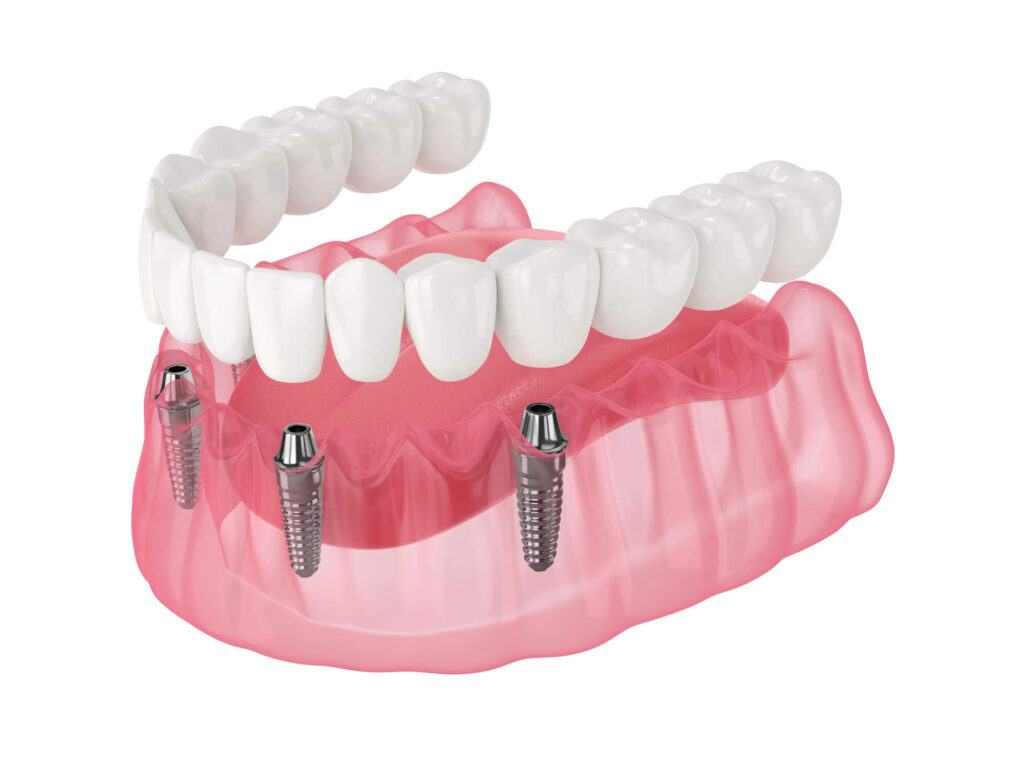
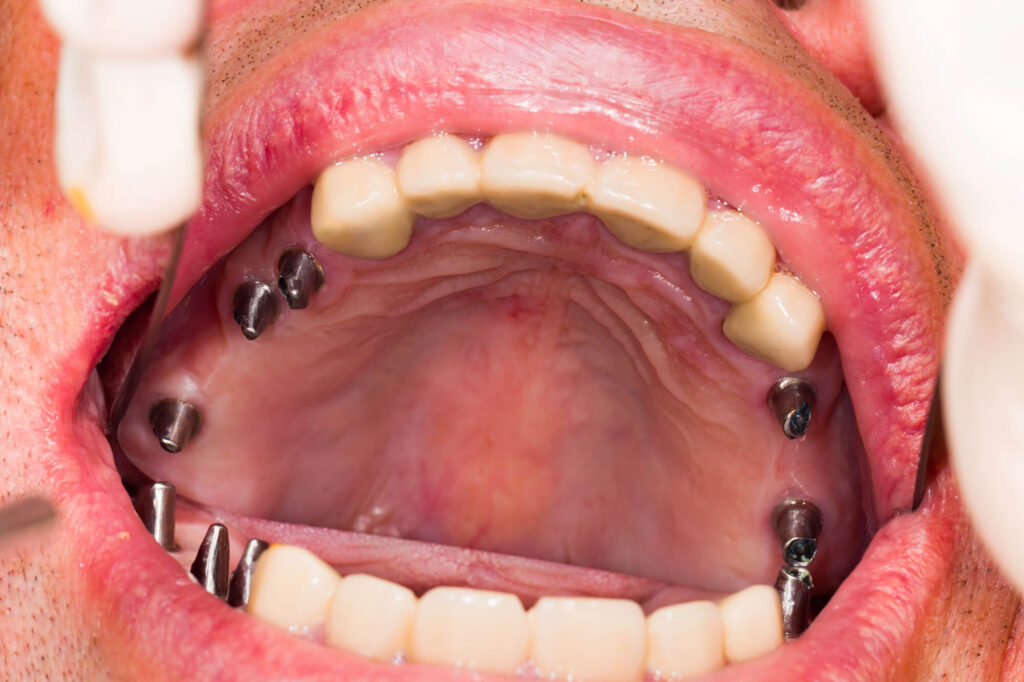
Full-mouth dental implants are a permanent tooth replacement option that uses titanium posts surgically placed into the jaw bone to support an entire row of teeth. Typically, a minimum of 4 implant posts per arch are needed to secure a full set of prosthetic replacement teeth, offering a stable, lifelike alternative to removable dentures.
This system mimics the function of a natural tooth root, helping to maintain jawbone density, stimulate bone growth, and preserve the patient’s facial structure. At 4M Dental Implant Center, the procedure often includes advanced planning, digital imaging, and precise placement for optimal function and aesthetics.
Benefits of Full Mouth Implants
- Helps Preserve Bone: By stimulating the bone like natural teeth, they help preserve jawbone around the posts, avoiding the bone resorption associated with tooth loss and conventional dentures.
- Natural Look and Feel: Custom-designed prosthetic teeth offer a natural appearance and closely match your real teeth in color, shape, and function.
- Superior Stability: Unlike removable options, implants are fixed in place — no denture adhesives or slipping.
- Restored Function: You can eat a full range of foods again with optimal chewing power and improved bite force.
- Long-Term Value: With proper maintenance, full-mouth implants can last decades, reducing the need for constant replacements or frequent maintenance.
- Boosts Confidence: Patients regain their ability to smile, speak, and live with comfort — restoring confidence after tooth loss.
Other Considerations
- Surgical Procedure: Both dentures and this option involve oral surgery, which may include dental implant surgery, extractions, or additional procedures like bone grafting, depending on jawbone density.
- Healing Time: Recovery varies, but with proper care, most patients can enjoy most of their favorite foods after a few days, even while undergoing a healing period before the final crowns or bridges are placed.
- Upfront Cost: While it can be a more expensive solution than dentures initially, it can save money over time due to fewer replacements and better durability.
- Bone Requirements: Some patients with low bone density may require a bone graft sinus lift or other preparatory work — though advanced systems at 4M often minimize this need.
For patients seeking a permanent denture alternative that offers both aesthetic and functional advantages, full-mouth implants remain one of the most effective treatment options available today.
Schedule Your Free Consultation
Dentures vs Implants Cost: What Affects the Price?
Cost is one of the biggest considerations when choosing between dentures and full-mouth dental implants. Traditional dentures generally have a lower initial price, while dental implants require a larger investment in surgical treatment and custom restorations.
However, the total cost of either option depends on several factors.
Main Cost Factors for Traditional Dentures
Several factors can influence how much you pay for a complete set of dentures:
- Denture materials and customization: The quality of the acrylic, resin, replacement teeth, and overall design can affect the final price.
- Extractions and preparatory treatment: Removing damaged teeth or treating existing oral health problems may add to the initial cost.
- Type of dentures: Conventional, immediate, and implant-supported dentures have different treatment requirements and associated expenses.
- Adjustments and relining: Changes in your gums and jawbone can affect denture fit, requiring periodic adjustments or relining.
- Replacement and maintenance: Dentures may need to be repaired or replaced as they wear down or no longer fit comfortably.
Main Cost Factors for Full-Mouth Dental Implants
Full-mouth dental implant costs depend on several clinical and restorative factors:
- Number of implants: The number and positioning of implants needed to support an upper or lower arch affect surgical planning and cost.
- Jawbone and gum health: Extractions, periodontal treatment, bone grafting, or other preparatory procedures may be necessary for some patients.
- Restoration materials: A titanium-bar-supported PMMA prosthesis and a custom zirconia full-arch restoration have different material and fabrication costs.
- Diagnostic and surgical procedures: Digital imaging, treatment planning, anesthesia or sedation, and placement contribute to the overall investment.
- Temporary and final restorations: The number of restorative stages and whether a separate permanent set is included can affect the total treatment price.
- Follow-up and long-term care: Routine maintenance, professional cleanings, and potential prosthetic repairs should be considered.
Which Option Offers Better Long-Term Value?
Dentures can be a practical choice for patients seeking a lower upfront cost or a non-implant solution. However, adjustments, relining, adhesives, and eventual replacement may add to their long-term expenses.
Full-mouth implants typically cost more initially, but their stability, chewing function, and potential longevity can provide meaningful value over time. These type of restorations still require professional maintenance, and future repairs or replacement components may involve additional costs.
At 4M Dental Implant Center, treatment options include removable dentures, implant-supported dentures, and fixed full-arch solutions. A personalized evaluation helps determine which approach best fits your dental health, budget, and long-term goals.
Dentures vs Implants: Key Differences at a Glance
|
Feature |
Traditional Dentures |
Full-Mouth Dental Implants |
|
How they work |
Removable replacement teeth that rest on the gums |
Fixed replacement teeth supported by implants in the jawbone |
|
Stability |
May shift or loosen, especially as the gums and jawbone change |
Securely anchored for greater stability |
|
Chewing ability |
Some hard, sticky, or chewy foods may be difficult |
Generally provides stronger, more stable chewing after healing |
|
Comfort |
May cause pressure spots or gum irritation |
Does not rely on the gums alone for support |
|
Appearance |
Custom-made to resemble natural teeth |
Custom-designed to restore a natural-looking smile |
|
Jawbone preservation |
Does not prevent the bone loss associated with missing teeth |
Helps preserve bone around the implants |
|
Daily maintenance |
Must be removed and cleaned regularly |
Fixed teeth remain in place and require proper daily cleaning |
|
Treatment process |
Usually non-surgical unless extractions are needed |
Requires implant surgery and a healing period |
|
Upfront cost |
Generally lower |
Generally higher |
|
Long-term maintenance |
Periodic relining, adjustments, and replacement |
Professional maintenance and possible repairs or replacement of prosthetic components |
|
Longevity |
Typically requires replacement as fit and materials change |
Implants may last decades with proper care, although prosthetic teeth can need repairs or replacement |
What about implant-supported dentures?
These can offer a middle ground in certain cases. Dental implants provide additional stability, while the denture may remain removable for cleaning. They can be an option for patients who want more security than traditional dentures without choosing a fixed full-arch restoration, although full-mouth solutions are recommended whenever possible.
How to Decide Between Dentures vs Implants
Choosing between dentures and dental implants isn’t just about cost or procedure — it’s about your lifestyle, long-term health, and what you want your smile to do for you. Here’s how to weigh the options and make a decision with confidence.
Key Factors to Consider
- Bone health and gum disease status: Individuals with active gum disease or significant bone loss may need additional procedures, such as bone grafting, to become candidates for dental implants. That said, modern techniques — like those at 4M — often allow treatment without a bone graft.
- Age: Patients under 60 often prioritize long-term, permanent solutions and may be more likely to invest in full-mouth implants. Older individuals may choose dentures due to medical conditions, recovery time, or personal preference.
- Timeline: Both implants and dentures can typically be delivered in a quick period, with 4M even offering same-day implants. While implants require a healing period, patients can still enjoy their favorite foods and live their daily routines with zero issues, all while implants also offer lasting results that reduce the need for future replacements.
- Budget and financing options: While implants come with higher upfront costs, they can save money over time due to fewer adjustments and longer lifespans. Dentures, while more affordable initially, often require relining, replacements, and regular appointments for ongoing fit.
- Medical conditions: Certain health issues, such as uncontrolled diabetes, can affect healing after oral surgery and may influence which option is best suited.
- Personal goals: Consider what you want most — whether it’s better function, long-term savings, etc. Do you want a permanent solution with restored confidence and full biting ability? Or an appliance that requires more daily care and occasional adjustments?
Candidacy and Consultation
Ultimately, the best way to know what’s right for you is through a personalized consultation. At 4M Dental Implant Center, patients undergo advanced imaging and a full-mouth evaluation to assess:
- Bone density and jaw structure
- Presence of gum disease or other oral health concerns
- Medical history and risk of complications
- Suitability for either removable prostheses or permanent dental implant procedures
The good news? With 4M’s advanced techniques, 99.9% of patients are candidates for implant-supported options — even those previously told they didn’t qualify due to bone loss or age.
How Dentures and Implants Affect Your Lifestyle
The differences between dentures and dental implants extend beyond appearance and cost. Your choice can influence what you eat, how comfortably you speak, your daily oral hygiene routine, and how confident you feel in social situations.
Eating and Enjoying Your Favorite Foods
- Traditional dentures can restore basic chewing function, but certain foods may remain challenging. Tough meats, crunchy vegetables, sticky foods, and other difficult-to-chew meals can cause discomfort or make dentures shift.
- Full-mouth dental implants provide a more stable foundation for replacement teeth, allowing many patients to enjoy a wider variety of foods after healing. However, patients must follow a prescribed soft-food diet during the initial recovery period, even when temporary fixed teeth are placed shortly after surgery.
Speaking and Social Confidence
- Loose or poorly fitting dentures can sometimes affect pronunciation, especially when speaking quickly, laughing, or eating in public. Denture adhesives may improve stability, but they do not eliminate every fit-related concern.
- Fixed implant-supported teeth remain anchored in place, reducing concerns about movement during conversations and social activities. Both dentures and implants require an adjustment period, but many patients appreciate the added security of a fixed restoration.
Daily Cleaning and Maintenance
- Traditional dentures must be removed for regular cleaning and are generally taken out overnight. This routine also includes caring for the gums and monitoring changes in fit.
- Fixed full-mouth restorations stay in place during daily activities, but they are not maintenance-free. Patients must carefully clean around the prosthesis and implant-supported areas using the techniques and tools recommended by their dental team. Regular professional maintenance remains essential for protecting the artificial teeth and surrounding tissues.
Travel, Activities, and Everyday Convenience
- Removable dentures may require patients to carry cleaning supplies, adhesives, or a storage case when traveling. Activities involving frequent eating or extended social interaction can also make denture stability a concern.
- Full-mouth implants eliminate the need for denture adhesives and routine removal of a fixed prosthesis. For patients seeking greater convenience and confidence in everyday activities, this can be an important advantage.
Ultimately, the best option is the one that supports your health, personal preferences, and daily routine. At 4M Dental Implant Center, your consultation considers not only your oral health but also how you want to eat, speak, smile, and live with your replacement teeth.
4M’s Approach to Full Mouth Restoration
At 4M Dental Implant Center, a full-mouth restoration is about restoring lives and not just about replacing teeth. With extensive experience in both dentures and full-mouth dental implants, 4M helps patients choose the solution that aligns with their health, goals, and lifestyle, and all under one roof.
Why Dental Implants Are Prioritized
While 4M offers multiple treatment options, implant-supported restorations are often recommended due to their long-term benefits, stability, and ability to support overall oral health.
Here’s what sets 4M’s dental implant process apart:
- Advanced imaging and diagnostics allow for precise planning and placement of implant posts.
- Minimally invasive techniques often eliminate the need for bone grafting, even in patients with bone loss.
- In-house surgical care and prosthetic design streamline the process and reduce treatment time.
- Implant teeth delivered in 24 hours in many cases — reducing wait time between surgery and smile transformation.
- Custom-designed prosthetic teeth restore the natural appearance of your smile and optimize chewing function.
This level of precision, experience, and efficiency helps 4M maintain a high implant success rate — and makes the implant process accessible to more patients than ever before.
But Dentures Still Have a Role
There are situations where dentures may still be the better fit. These include:
- Medical limitations that make surgical procedures a higher risk
- Patients who need a temporary solution before committing to implants
4M provides high-quality complete dentures, partial dentures, and even implant-supported dentures as part of a full spectrum of care. Each appliance is custom-fitted and designed to provide comfort, function, and a natural appearance.
Whether patients choose removable dentures, implant dentures, or a hybrid approach, they benefit from compassionate care, modern dental technology, and a team dedicated to long-term results.
Find the Right Solution for Your Smile
Deciding between dentures and full-mouth dental implants is a deeply personal choice — and one that should reflect more than just cost or convenience. It should consider your long-term comfort, dental health, lifestyle, and the confidence you want to feel every time you smile, eat, or speak.
At 4M Dental Implant Center, we don’t believe in one-size-fits-all care. We offer personalized treatment plans, advanced diagnostics, and a wide range of tooth replacement options to ensure every patient receives the best solution for their needs, whether that’s removable dentures, full arch implants, or a transitional plan that evolves over time.
Schedule your consultation with 4M Dental Implant Center today to take the first step toward a complete, confident, and healthier smile for life.