One second you’re biting a popcorn kernel or hard candy, and the next you feel that sharp, new edge on a tooth. Your tongue won’t leave it alone, your smile feels different, and a quiet worry starts: “Is this a quick fix, or is this going to get expensive?”
Any chipped tooth deserves a dental clinic visit because even small chips can weaken a tooth, change how you bite, and trap plaque.
This guide provides general information about chipped tooth repair, not a diagnosis or dental care plan, as only an exam and imaging can show what your tooth really needs and what treatment may cost in your situation.
Instead, you’ll have a simple way to tell minor chips from more serious damage, a clear picture of the main chipped tooth repair and replacement options, and a better sense of what usually drives tooth repair costs up or down, so you can choose your next step with more confidence.
What Actually Happens When You Chip a Tooth?
When you chip a tooth, you’ve knocked off part of the hard outer shell called tooth enamel, and sometimes the softer inner layer known as dentin, underneath.
That changes how bite forces travel through the tooth and can create pathways for bacteria, cracks, and sensitivity, impacting your healthy smile.
Shallow chips in the enamel might primarily pose a comfort and appearance issue, while deeper tooth fractures that reach the dentin can require immediate repair to prevent pain or infection.
Even if you feel fine, a dental examination with traditional or digital X-rays can help identify hidden cracks or previous fillings that might make the tooth weaker than it appears.
Early assessment and treatment, potentially involving restorative dentistry options like dental bonding, dental veneers, or a dental crown, can save the tooth and reduce future costs. Additionally, your dentist might discuss dental insurance, payment plans, and other dental financing options to manage your tooth repair cost.
Why Even Small Chipped Teeth Shouldn’t Be Ignored
It’s easy to overlook a chipped tooth until it becomes a more significant issue affecting your smile.
That sharp edge might seem like a nuisance today, but over time it can lead to problems that require more involved and costly treatment.
When tooth enamel is missing, you’re more likely to experience:
- Spreading tooth fractures as bite pressure concentrates on a weakened spot
- Sensitivity to cold, air, or sweet foods if dentin is exposed
- Plaque buildup around the rough edge increases the risk of decay
If the tooth already has a large filling, has been compromised by bruxism, or is worn down from grinding, that small chip may be where a deeper fracture eventually starts.
In kids and teens, chips in permanent teeth can affect speech, chewing, and confidence at school. In adults, delaying treatment can sometimes escalate a simple case resolved with dental bonding into the need for a crown, root canal, or even an extraction later.
The goal is to seek dental care promptly without panicking. A short visit to the dentist can usually determine whether your chipped tooth requires a smooth and watch approach or a more robust repair with materials such as composite resin, porcelain veneers, or a dental crown.
Pide cita para una consulta gratuita
How to Tell if Your Chipped Tooth Is Minor or Serious
While it’s best to consult with your dentist, you can perform a quick self-assessment to gauge the urgency of the situation. Use a mirror and gently explore the area with a clean finger, avoiding the use of any metal utensils. Pay attention to any discomfort you feel when eating or drinking.
Here’s a simple way to categorize the severity:
- Minor Chipped Tooth: Small rough edge, no significant pain, and normal bite alignment. These may only require dental bonding with tooth-colored composite resin to restore your smile, but will likely not impact the overall function of your healthy teeth.
- Moderate Chipped Tooth: Noticeable missing piece, brief sensitivity to cold, air, or sweets due to exposed dentin. Treatment might include a dental veneer or composite resin.
- Major Chipped Tooth: Large piece missing, possible nerve or pulp exposure, steady or throbbing pain, or even a loose tooth. This situation could necessitate more extensive treatments such as a dental crown or root canal therapy. Dental X-rays or Cone Beam 3D imaging will likely be part of your dental care to assess the damage more accurately.
If you experience any chip accompanied by facial swelling, a bad taste in your mouth, fever, or difficulty swallowing, an emergency dentist visit is in order. A loose tooth after an impact also requires quick attention.
If you’re uncertain about the severity of your chip, a dental examination will eliminate guesswork and help you devise a suitable treatment plan, potentially incorporating dental insurance coverage, payment plans, or other financing options to manage the cost.
What Should You Do Right After Chipping a Tooth?
If you’ve just chipped a tooth, take these crucial first steps:
- Start by rinsing your mouth gently with warm water (salt water is optimal).
- If you can find the broken piece, keep it in a clean container and bring it with you to the dentist.
- If the edge is sharp enough to irritate your tongue or cheek, dental wax (orthodontic wax) or a small piece of sugarless chewing gum can temporarily cover it, although avoid actually chewing on the damaged tooth until you know how deep the break goes.
- A cold compress against the outside of your face may also help with swelling after an injury.
- Don’t try to smooth, file, or glue the tooth yourself. A chip that looks small in the mirror may extend deeper than you can see, and household glues or DIY repair products are not substitutes for dental treatment.
- Call a dentist promptly, especially if you have significant pain, increasing sensitivity, bleeding, facial swelling, or a large piece of tooth missing.
- Fever, trouble swallowing, or difficulty breathing requires urgent attention.
Your dental care provider will consider three main factors:
- Depth of the dental trauma or damage
- Whether the pulp or nerve is at risk
- The remaining strength of the tooth
Those will determine the dental work needed from that point on.
Repair Options for Small Chips and What They May Cost
Minor chips are the ones where the tooth mostly looks whole but feels sharp or slightly rough. There’s no deep ache, your bite still lines up, and the main goal is to smooth and protect the area so it doesn’t become a bigger problem.
For small chips, dentists often consider:
- Smoothing and polishing: Gently rounding off the sharp edge so it feels smooth again, and is usually the lowest-cost option.
- Small composite dental bonding: Adding tooth-colored resin to rebuild a small missing corner. When composite bonding is needed, fees often fall in the low hundreds of dollars per tooth, depending on how large the chip is, where the tooth is located, and local dental fees.
- Monitoring: Watching a tiny chip that is out of your bite and not causing problems.
Insurance may be more likely to help when the repair is needed for function rather than appearance alone, so your actual out-of-pocket cost can vary.
Tooth bonding for a minor chip can last for years, but it may stain faster than natural enamel and can occasionally chip again.
Avoid chewing ice, pens, or very hard foods on that tooth, and ask your dentist about a night guard if you grind your teeth. Catching damage at this stage is often the simplest and most affordable approach.
When Does Chipped Tooth Repair Require a Dental Crown?
With a moderate chip, more of the tooth is missing. You might feel a catch when you bite or notice that one side of the tooth looks shorter or flatter than before. Cold drinks may cause a quick shock, and you may worry that the tooth will continue to break.
Common chipped tooth repair options in this situation include:
- Larger composite bonding or filling: Rebuilds the missing area when enough healthy tooth remains
- Porcelain Veneer: Covers the front surface of a tooth and may be considered for certain front-tooth chips when appearance is a main concern, and the underlying tooth remains strong.
- Dental onlay or partial dental crown: Covers one or more cusps to reinforce weaker areas.
- Full crown: Covers the tooth when there isn’t enough strong tooth structure left
Your dentist will look at how much healthy tooth remains, whether cracks extend toward the nerve, how heavy your bite is, and, for front teeth, how the repair will look when you smile.
Often, the first goal is to protect the tooth from further fracture.
At 4M Dental Implant Center, treatment planning can range from preserving and restoring a damaged tooth to addressing more complex restorative needs, depending on what the exam shows and what makes sense for your long-term oral health.
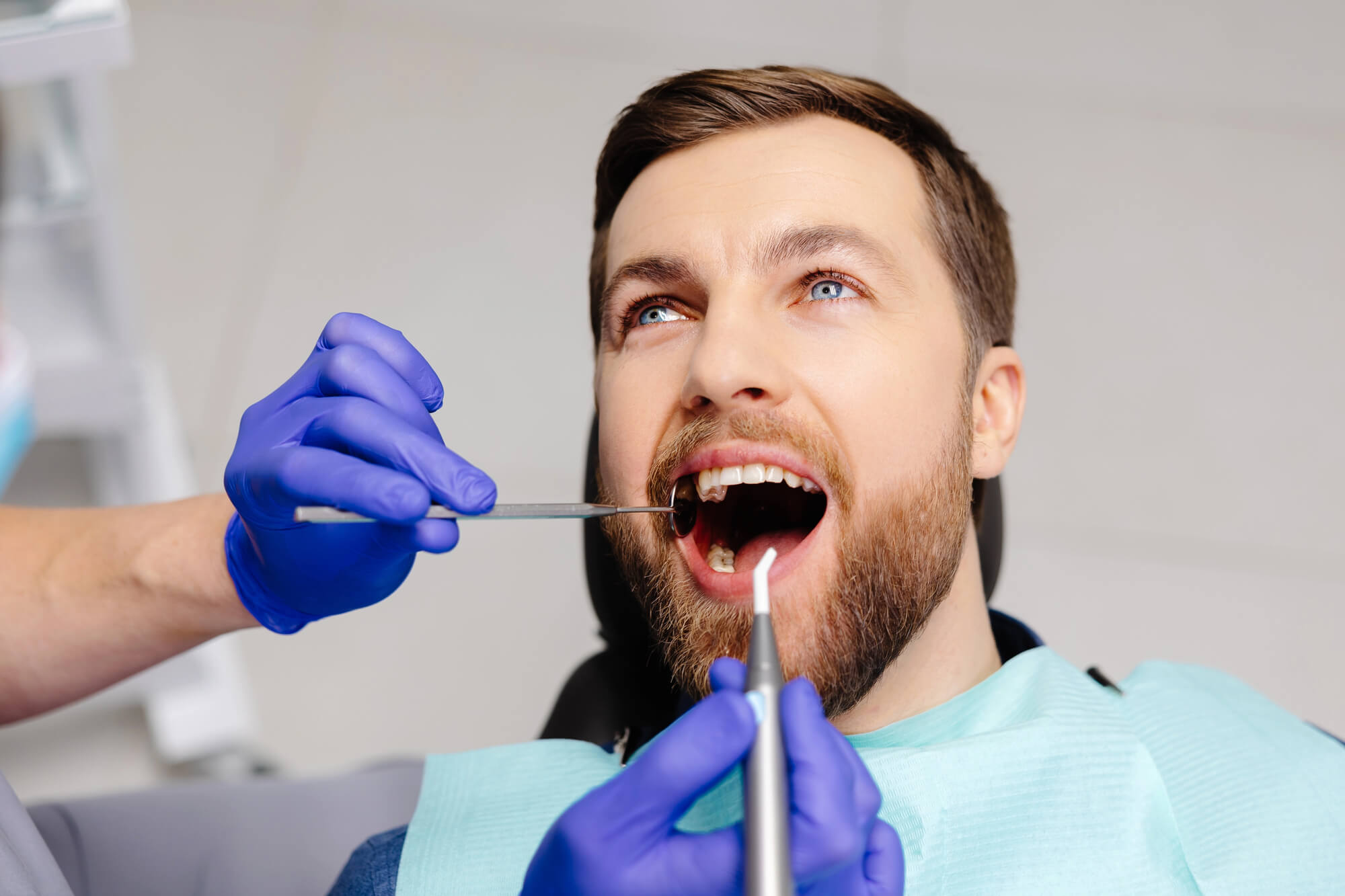
How Much Does Chipped Tooth Repair Cost?
The cost of chipped tooth repair depends mostly on how much of the tooth is damaged and what is needed to restore it.
A small chip that only needs smoothing will generally cost less than dental bonding, while a deeper break that requires a veneer, onlay, crown, root canal, or other restorative treatment can cost considerably more.
Several factors can affect your final chipped tooth repair cost:
- How large and deep the chip is
- Which tooth is damaged
- Whether the nerve is involved
- The type of restoration and material used
- Whether additional treatment is needed
- Your dental insurance benefits
- Dental fees in your area
Because two chipped teeth that look similar can need very different treatment, an exam is the most reliable way to understand your actual cost.
Ask for a written estimate from your dental provider that separates the recommended treatment from any optional cosmetic dental services so you can see exactly what you’re paying for.
When a Chipped Tooth Becomes a Dental Emergency
Severe breaks are usually difficult to miss.
A large piece of tooth may be gone, you may see pink or red tissue inside, and biting down may cause sharp or throbbing pain. Facial swelling, fever, a bad taste in your mouth, or trouble breathing or swallowing can signal a more serious problem and should be evaluated promptly.
In these situations, treatment may happen in stages:
- First, your dentist focuses on relieving discomfort and protecting exposed areas. Modern anesthetic techniques and, when appropriate, sedation can also help make complex dental visits more comfortable.
- If the nerve is damaged or infected, root canal therapy may be recommended to clean and seal the inside of the tooth.
- If a large amount of tooth structure is missing, a titanium post and crown dental implant may sometimes be used to replace the tooth.
Root canal treatment, emergency visits, and treatment for infection generally fall toward the higher end of dental costs. That’s one reason it’s wise to have worsening pain or signs of infection evaluated promptly.
When Saving a Chipped Tooth May Not Be the Best Long-Term Option
If a chipped tooth has broken beyond predictable repair, the conversation may shift from “How do we fix this tooth?” to “What’s the best way to replace it?” That can feel like a big step, but in some situations, a well-planned replacement can offer better long-term function and predictability than repeatedly repairing a severely damaged tooth.
For example, sometimes a tooth is cracked below the gumline or damaged so extensively that saving it may not provide a predictable long-term result. In those cases, removal and replacement may be recommended instead of repeated repairs.
Additionally, children with broken front teeth may need temporary restorations or nerve protection while their roots continue to develop.
Common tooth replacement options include:
- Single dental implant: An implant placed in the jaw that supports a replacement crown. They can provide strong chewing function and help preserve bone in the area, but they require appropriate bone support and time for healing.
- Fixed bridge: A replacement tooth supported by neighboring teeth. Bridges can often be completed sooner, but usually require treatment of the neighboring teeth.
- Removable partial denture: A removable appliance that replaces one or more missing teeth. Partial dentures generally have a lower upfront cost and can replace several teeth, although they are removable and may require adjustments over time.
The least expensive option today is not always the least expensive option over many years. It helps to ask which approach best fits your oral health, habits, goals, and long-term expectations.
At 4M Dental Implant Center, our team also evaluates more complex restorative and implant options when a tooth can no longer be predictably saved, so patients can understand both tooth-preserving and replacement paths before making a decision.
How Long Does it Take to Repair a Chipped Tooth?
The time it takes to repair and treat dental chips is hard to pin down to a narrow range, as several factors determine the timeline.
The number of visits depends on:
- The location
- Depth of the chip
- Health of the tooth
- Type of restoration being used.
Small chips that only need smoothing, bonding, or a simple composite repair can often be treated in a single appointment.
More extensive damage may take longer, especially if the tooth needs a lab-made veneer, onlay, crown, root canal treatment, or another procedure before the final restoration can be placed.
After an exam, your dentist can explain what can be completed right away and whether additional appointments will be needed.
How Long do Chipped Tooth Repairs Lasts?
How long the repair lasts also depends on:
- The size of the break
- The type of treatment used
- Your bite
- Habits such as grinding or chewing hard foods
Small bonded repairs may provide years of service but can eventually stain, wear, or chip again.
Veneers, onlays, and crowns are designed for longer-term restoration, although no dental restoration should be considered permanent or guaranteed to last for a specific number of years.
Regular dental visits can help your dentist monitor the repaired tooth, your bite, and the condition of the restoration. Avoiding ice, hard objects, and untreated grinding may also help reduce the chance of another fracture.
How Dentists Match Chipped Tooth Repair to Your Goals and Budget
Chipped tooth repair is usually based on three main questions: How deep is the damage? How much pressure does that tooth handle? And what matters most to you?
A thorough dental examination will answer those questions, which will then result in a treatment plan that may include:
- A written estimate for each treatment option
- Priorities for what should be treated first and what may be able to wait
- Phased care, when appropriate, to spread treatment and costs over time
Dental insurance may provide more coverage for repairs considered necessary for oral health or function than for treatment that is considered by insurers as primarily cosmetic. It’s also reasonable to ask for plain-English explanations or seek a second opinion if you’re unsure about a recommended treatment.
Choosing Your Next Step for Chipped Tooth Repair
Standing in front of the mirror with a chipped tooth can leave you wondering whether it’s a minor inconvenience or the start of something more serious. You don’t have to figure that out on your own or try to judge the damage based only on pain or appearance.
A focused dental visit can give you clearer answers about the type of chip you have, whether repair or replacement makes more sense, and what each option may cost over time. A chipped tooth can sometimes progress into a cracked tooth or fully broken tooth if left unaddressed, so it’s worth having it looked at sooner rather than later. In the meantime, sticking to soft foods, chewing sugar free gum instead of anything sticky, and being mindful of jagged edges that can irritate your tongue or cheek can help you stay comfortable until you’re seen. Some patients also notice tooth sensitivity around the affected area, which is worth mentioning to your dentist during your visit.
At 4M Dental Implant Center, our team evaluates everything from damaged individual teeth to complex restorative and full-mouth cases. Our goal is to understand what can be preserved, what may need to be restored or replaced, and which options make the most sense for your oral health, comfort, goals, and budget. Depending on the extent of the damage, treatment might involve bonding, a temporary crown while a permanent restoration is prepared, or other solutions tailored to the specific tooth. Seeing your dentist regularly, and wearing a mouth guard during sports or nighttime grinding, can also help prevent future chips and cracks from happening in the first place.
If you have a chipped tooth and aren’t sure what it needs, scheduling an evaluation is a simple way to get clear answers and protect your smile before a small problem has the chance to become a larger one.
Pide cita para una consulta gratuita